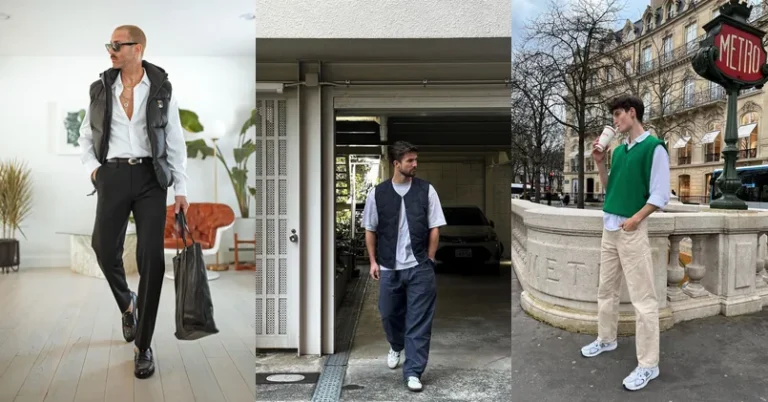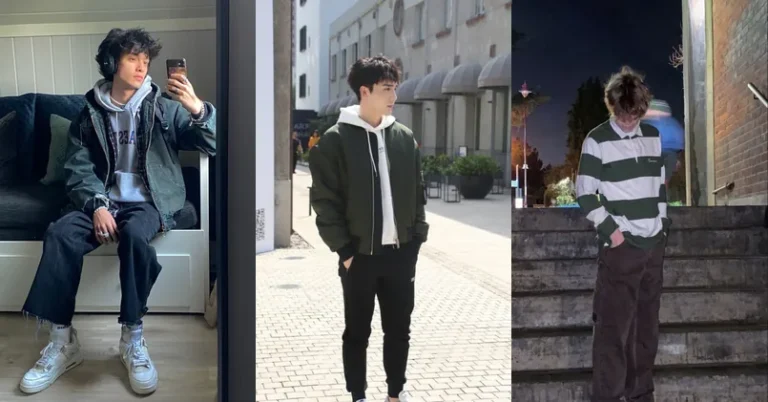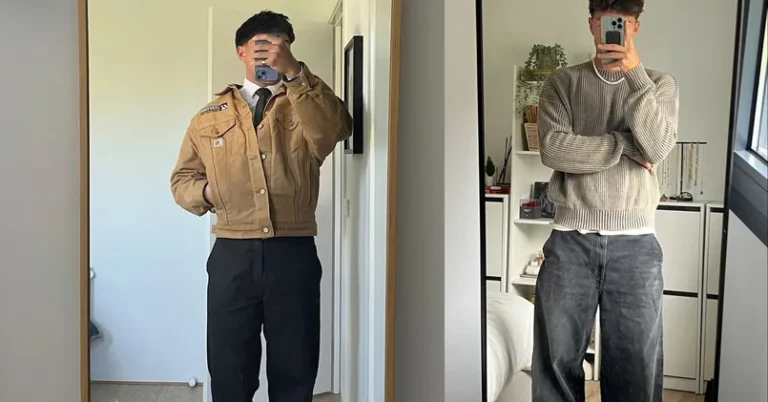
Casual men fashion is the territory where most guys either nail it without thinking or fail it without knowing why. The difference is rarely about the clothes themselves. It is almost always about proportion and intent. Two men can wear the same black tee, the same jeans, the same sneakers, and one looks like he planned the outfit while the other looks like he grabbed whatever was clean. The first one bought pieces that fit. The second one bought pieces that were available.
I spent years building a casual wardrobe by trial and error before I realized the system was simpler than I thought. Three neutral base pieces, two layering options, one statement shoe. That formula produces enough variety for a full month without repeating an exact look. Here is how each element works.
The Neutral Foundation
Every strong casual outfit starts with a neutral base: a well-fitting tee, a clean pair of pants, and a shoe that ties them together. The base is the canvas. Everything added on top (jackets, accessories, color) is the styling. Most guys skip straight to buying statement pieces and wonder why the outfit does not come together. It does not come together because the foundation is wrong.
Olive Tee With Beige Chinos and White Slip-Ons
A fitted olive green tee with tailored beige chinos and white slip-on shoes. This is the warm-weather neutral template. The olive and beige combination reads as earthy and intentional without being loud. The tee should be fitted (not tight, not oversized) so it sits flat against the body. The chinos should taper at the ankle. The slip-on shoe keeps the bottom clean and avoids the visual noise of laces. I wear this combination for Saturday errands, casual dinners, and every situation where “jeans and a tee” would work but I want to look like I chose the outfit on purpose.
Blue Sweater Over White Shirt With Navy Chinos
A light blue sweater layered over a white button-down with slim navy chinos and white sneakers. The shirt collar peeking above the sweater neckline is the detail that converts this from “wearing a sweater” to “wearing an outfit.” It takes two seconds to create and it signals that you understand layering. The blue tones (light sweater, dark chinos) create a tonal range that reads as coordinated without being matchy. This is the combination I recommend for guys who want to look put together for a first date or a family event without feeling overdressed.
All-Black Base With Clean Sneakers
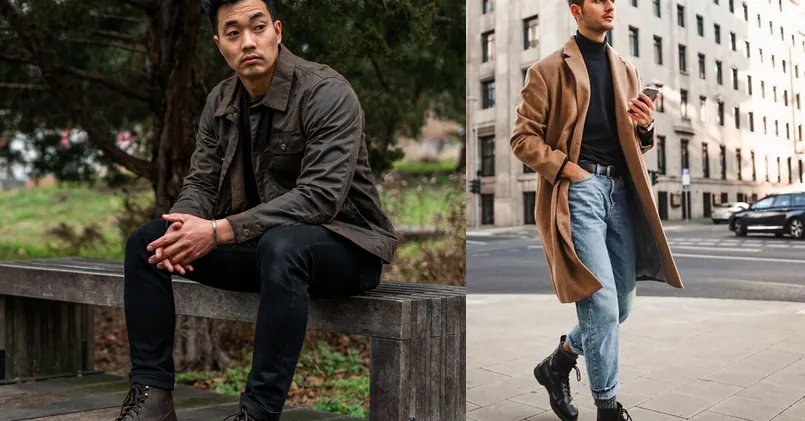
A black tee with slim black jeans, an olive utility jacket, and beige Chelsea boots. The all-dark base is the casual formula that coordinates itself. When the tee and jeans match, the only decisions are the jacket and the shoe. The olive jacket adds the color contrast that prevents all-black from reading as monotonous. The Chelsea boot is the shoe that bridges casual and smart-casual because the elastic panel and the ankle height read as more intentional than a sneaker. I own three identical black tees from Uniqlo and they handle about a third of my weekly outfits.
Gray Overcoat With White Tee and Black Pants
A gray overcoat over a white tee with cuffed black pants and white sneakers. The overcoat over a tee is the cold-weather move that adds sophistication without adding formality. The coat’s structure does the dressing up. The tee and sneakers keep it casual. The cuffed pant leg is a small detail that adds intention: it shows the sock (or skin) and creates a visual break between the pant and the shoe. This Korean fashion influence has made overcoats with casual bases one of the most common combinations on menswear Pinterest.
Layering That Adds Depth
Layering in men’s casual fashion follows one principle: each layer should be visible. The collar of one layer, the hem of another, the cuff of a third. If a layer is completely hidden, it is insulation, not styling. The best casual outfits have two to three visible layers that create depth without bulk.
Green Overshirt Over Black Turtleneck
A green overshirt layered over a black turtleneck with tailored black pants and white sneakers. The overshirt is the layering piece that every man should own because it works as a light jacket, a styling layer, and a standalone shirt depending on the weather. Over a turtleneck, the overshirt creates two visible layers (collar of the turtleneck, lapel of the overshirt) that add visual interest to an otherwise simple outfit. Green over black is a combination that reads as outdoorsy and urban at the same time.
Rugged Green Jacket With Black Jeans and Boots
A rugged green jacket over a dark base with black jeans and brown boots. The green jacket reads as outdoors-inspired without being full outdoor gear. Brown boots ground the outfit in a workwear context that grunge and Americana both share. The contrast between the rough jacket texture and the clean dark jeans is what makes this casual rather than costume: one rugged piece, one clean piece. If both were rugged, it reads as hiking. If both were clean, it reads as office. The mix is the formula.
Shacket Over Neutral Base
A shirt jacket (shacket) over a simple tee with casual pants. The shacket is the layering piece that replaced the denim jacket for many guys because it provides the same casual structure with a wider range of fabrics and weights. Flannel shackets for fall, cotton shackets for spring, and wool-blend shackets for winter. The key to wearing a shacket well is leaving it unbuttoned so the base layer underneath is fully visible. Buttoned up, it looks like an oversized shirt. Unbuttoned, it looks like a styling choice.
Bomber Jacket With Minimal Base
A bomber jacket over a simple tee with slim pants and sneakers. The bomber is the casual jacket that adds structure without formality. It sits at the waist (unlike a longer coat) and the ribbed cuffs and hem create a contained silhouette that works with both slim and relaxed pants. The bomber’s elasticated hem is what keeps the outfit looking neat even when the jacket is unzipped: it holds the shape at the hip rather than flaring open. I consider the bomber the most underrated casual jacket because it makes any basic outfit look like a styled one.
Color and Texture as Casual Statements
Most casual men fashion stays in the safe zone of black, gray, navy, and white. That zone works, but adding one element of color or texture converts a safe outfit into a memorable one. The rule is: one statement, everything else quiet.
Beige Knit With Brown Trousers
A textured beige knit sweater with brown trousers and clean shoes. The tonal earth palette (beige and brown) is the color move that reads as sophisticated without feeling risky. The knit texture adds the visual interest that a flat cotton tee in the same color would not. I started incorporating more earth tones into my wardrobe after noticing how well they photograph in natural light. The Japanese fashion influence on Pinterest shows this palette consistently because it works in almost every setting.
Light-Wash Denim Jacket Over Dark Outfit
A light-wash denim jacket over a dark tee and dark pants. The color contrast between the light jacket and the dark base is instant visual interest with zero coordination effort. The denim jacket is the statement piece that tells everyone you are not just wearing clothes, you are wearing an outfit. Light denim on dark fabric creates a frame effect: the eye goes to the contrast first, which is the jacket, which is the styling piece. This combination works year-round: over a tee in summer, over a hoodie in winter.
Red or Bold Accent in a Neutral Outfit
A neutral casual outfit with one bold color accent: a red layer, a colored sneaker, or a bright bag. The single bold element against an otherwise quiet outfit is the easiest way to add personality without overthinking. A red windbreaker over gray and black. A yellow beanie over all-navy. A green bag with all-black. The accent color does the styling work. Everything else just needs to not compete. I keep one bold windbreaker jacket (mine is burnt orange from Uniqlo, about $50) and it changes my neutral rotation instantly every time I add it.
Building the Casual Rotation
Start with ten pieces: three tees (white, black, olive or gray), two pants (dark jeans and chinos in beige or gray), one overshirt or shacket, one jacket (bomber, denim, or utility), one knit sweater, white sneakers, and Chelsea boots. Those ten create at least twenty combinations. The entire set costs about $300 at Uniqlo, Zara, or COS. Fit matters more than brand. A $20 tee that sits right on the shoulder, hits at the belt line, and tapers slightly through the torso will outperform a $60 tee that is too long or too wide. Try everything on. Return what does not fit. The extra trip to the store saves you from a closet full of pieces you never reach for.
Frequently Asked Questions
What is smart casual for men?
Smart casual sits between full casual and business casual. It means a collared or quality knit shirt, tailored pants (not jeans), and clean shoes. Sneakers work if they are leather or minimal. No graphic tees, gym shorts, or athletic shoes.
How can men dress casually but look good?
Focus on fit first. A well-fitting tee and jeans look better than expensive pieces in the wrong size. Then add one layering piece (jacket, overshirt, or open button-down) and one intentional shoe choice. Two decisions upgrade any basic outfit.
What colors work best for casual men fashion?
Black, white, gray, navy, and olive are the safe base. Earth tones (beige, brown, tan) add warmth without risk. One bold accent color (red, burnt orange, mustard) per outfit adds personality. Keep the base neutral and let one piece do the talking.
What shoes go with every casual outfit?
Clean white leather sneakers are the most versatile. Chelsea boots bridge casual and smart-casual. Together, those two pairs handle every non-formal occasion. Avoid running shoes and athletic sneakers with non-sporty outfits.