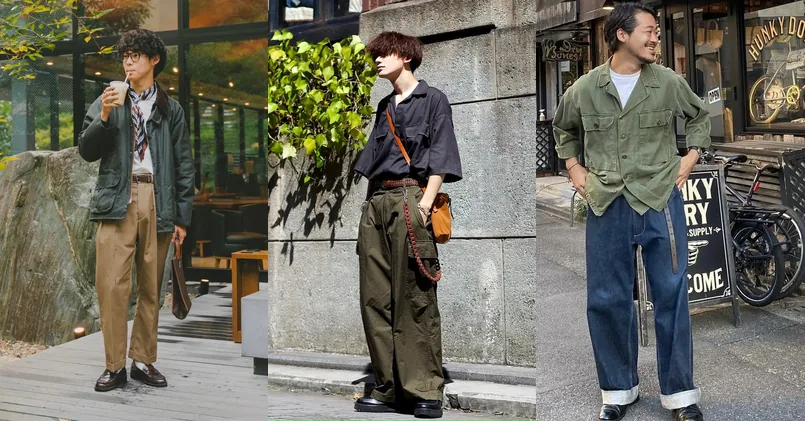
Pinterest keeps pinning oversized neutrals, which is where Japanese fashion men actually lives. I see it all over Pinterest, and the pins always look incredible, but the actual advice tends to stop at “wear oversized clothes.” That misses the point entirely. What makes Japanese menswear work is not just the silhouette. It is the specific relationship between oversized tops and tapered or wide bottoms, the intentional use of neutral earth tones, and the way accessories like bags, glasses, and hats do real structural work in the outfit.
I have been studying this aesthetic for years, and the more I look at it, the more I realize it operates on a few core principles that most Western menswear ignores. Proportion matters more than brand. Texture matters more than color. And looking “put together” does not mean looking fitted. Here is how I would actually build a Japanese-inspired wardrobe from scratch.
The City Boy Foundation
The starting point for most Japanese menswear is what gets called the “city boy” look in Tokyo. It is deceptively simple: relaxed proportions, neutral palette, one or two accessories that signal intentionality. The key is that nothing looks accidental. Every piece sits where it should, even when everything is oversized.
Knit Vest Over White Shirt With Red Socks
This is the outfit I would show someone who asks “what is Japanese fashion for men?” The knitted vest over a white shirt is the foundation. The rolled-up denim with those red socks is the detail that turns it from “guy wearing a vest” into something with a clear point of view. I wore a similar combination to a coffee meeting last fall and got three compliments before I sat down. The round glasses and tote bag complete it. Skip the glasses if they are not your thing, but keep the tote. A tote bag is non-negotiable in this aesthetic.
Navy Sweater Draped Over a White Shirt
The draped sweater is a signature move in Japanese menswear, and it works because it adds visual interest without adding bulk. The white shirt and dark wide-leg pants do the structural work. The sweater just sits on the shoulders, signaling “I thought about this.” White sneakers keep it grounded. This is a warm-weather layering trick I use constantly: the drape gives you autumn energy even in September.
Cable-Knit Sweater With Wide Dark Jeans
Navy cable-knit, wide-leg dark jeans, black Converse, crossbody bag. Four items, and the outfit looks completely thought-through. The trick here is the proportion balance: the chunky texture of the cable-knit against the clean fall of wide denim. Most guys would pair this sweater with slim jeans, and it would look fine but forgettable. The wide leg is what makes it Japanese-inspired rather than just casual. If you are into Korean mens fashion, you will notice the overlap in silhouette, but the texture choices are distinctly Japanese.
Oversized Navy Shirt Over White Tee
This is the easiest entry point into the aesthetic. An oversized button-down shirt, unbuttoned, over a white tee. Wide-leg gray pants. Round glasses. White sneakers. Nothing costs much, nothing requires a special trip. The shirt does not need to be expensive. It needs to be big enough that it sits off the shoulders slightly. That drop is where the whole look lives.
Workwear and Vintage Influence
Japanese menswear has a deep relationship with American workwear and vintage Americana. Brands like Kapital, Engineered Garments, and Beams Plus have been reinterpreting cargo pants, chore coats, and military pieces for decades. The Japanese version is looser, more textured, and more intentional than the American original.
White Tee With Khaki Trousers and Beret
A white tee tucked into high-waisted khaki trousers. Beret. Neckerchief. Round glasses. Polished black loafers. Every single accessory is doing something here. The beret sets a French-vintage tone. The neckerchief adds a focal point at the neck. The loafers sharpen the silhouette at the feet. Without these accessories, this would be a plain white tee and khakis. With them, it looks curated. The lesson: in Japanese fashion, accessories are not optional extras. They are load-bearing structural elements.
Olive Jacket Over White Tee With Cuffed Jeans
Japanese workwear at its most accessible. Olive chore jacket, white tee, wide cuffed jeans, black shoes. The cuff on the jeans is important because it shortens the visual line and shows the shoe more clearly. In Japanese styling, the ankle area gets a lot of attention. It is where the proportions resolve. I would keep the shoes dark and clean. This combination also works as a starting point for grunge fashion if you swap the white tee for something darker.
Cargo Pants With Utility Vest and Bucket Hat
Utility vests over relaxed cargo pants, finished with a bucket hat and sneakers. This is the functional side of Japanese streetwear. Everything has pockets. Everything sits loose. The neutral tones keep it from looking like a costume. I think the bucket hat is optional in most Western cities, but the utility vest is a seriously underrated layering piece. It adds visual weight to the upper body without adding warmth, which makes it perfect for those in-between months.
Beige Bird-Print Shirt With Straw Hat
An oversized beige shirt with a subtle bird print, wide-leg khakis, straw hat. This look leans into the relaxed, almost rural side of Japanese fashion. The straw hat is a bold choice, but it works because the rest of the outfit stays neutral. One statement piece per outfit is the rule. I like the print because it adds personality without competing with the silhouette.
Layering and Dark Tones
Where Japanese fashion really separates from Western basics is in layering. Not layering for warmth, but layering for visual depth. A jacket over a shirt over a tee creates three visible layers at the collar and cuff, and that depth is what makes even simple color combinations look considered.
Dark Green Jacket With Tan Pleated Trousers
Dark green jacket, white shirt underneath, tan pleated trousers, striped scarf, burgundy loafers with white socks. This is the most layered outfit in this guide, and every layer is doing something. The scarf adds a pattern break. The white socks with burgundy loafers create a visual gap at the ankle. The brown leather bag ties the warm tones together. I would wear this to a gallery opening or a dinner where I want to look sharp without wearing a suit.
Light Blue Shirt With Olive Cargo and Black Vest
The black vest over a light blue shirt is a layering combination that works year-round. It compresses the torso visually while the cargo pants widen at the bottom, creating that top-narrow, bottom-wide silhouette that defines so much of Japanese streetwear. The sneakers keep it casual. Every piece changes the proportions of the one next to it, and that is the logic behind the combination.
Dark Shirt With Wide Cargo Pants
Darker territory. A loose dark shirt, wide-leg cargo pants, brown belt, crossbody bag. The earthy tones ground the whole look. This is closer to the dark academia end of the spectrum but stays distinctly Japanese because of the silhouette. If those pants were slim, the entire mood would shift to something else entirely.
Black Puffer Jacket Over Plaid
Winter version. Black puffer over plaid, charcoal jeans, black shoes. The puffer jacket is everywhere in Japanese street fashion during cold months. The trick is keeping it short enough that the plaid shirt peeks out at the bottom, adding a texture layer. I would add a scarf or beanie to finish this, but as is, it is a solid cold-weather outfit that does not sacrifice the aesthetic for warmth.
Minimal and Oversized
At the most minimal end of Japanese menswear, you find outfits where the silhouette itself is the statement. No accessories, no layering tricks. Just one or two pieces, sized and proportioned in a way that makes “simple” look deliberate.
Black Oversized Shirt With Baggy Khakis
Two pieces. An oversized black shirt and baggy khaki pants. A necklace and keychain for detail. That is it. What holds it is the color contrast between the dark top and light bottom. It creates a clear visual break at the waist, which prevents the oversized fit from looking shapeless. I would wear this exact combination on a Saturday when I want to look good with zero effort.
White Shirt With Olive Cargo and Crossbody
White oversized shirt, olive cargo pants, chunky black shoes, crossbody bag. Clean, balanced, and completely reproducible. The crossbody bag adds a diagonal line across the chest that breaks the visual monotony of the shirt. Without it, the outfit is fine. With it, the outfit has a focal point.
Gray Oversized Suit With Chunky Sneakers
The more formal end. A gray oversized suit with a black shirt, wide-leg trousers, and chunky white sneakers. The sneakers are what makes this Japanese rather than business casual. They break the formality just enough. The suit jacket sits with dropped shoulders, relaxed through the body, clearly too big by Western tailoring standards but perfectly sized for this aesthetic. This is the outfit that made me realize Japanese fashion is not about being anti-formal. It is about redefining what formal looks like.
White tee, then the wide pant
If I were building a Japanese-inspired wardrobe from zero, I would start with five pieces: a white oversized button-down shirt, a pair of wide-leg khaki or olive pants, white sneakers, a crossbody or tote bag, and round glasses (even non-prescription). Those five pieces appear in almost every outfit in this guide. From there, add a knit vest, a chore jacket, and one pair of black wide-leg pants. That gives you enough to build a dozen combinations without repeating yourself.
The brands do not matter as much as the fit. Uniqlo U, COS, and thrifted pieces all work. The only rule is: if it fits like Western casualwear (slim, tapered, fitted), it will not look like Japanese fashion. Buy a size up. Let the fabric hang. Trust the proportion.
How is Japanese fashion different from Korean fashion for men?
Both use relaxed silhouettes, but Japanese fashion leans more toward workwear textures, earth tones, and vintage influences, while Korean fashion tends toward cleaner lines, monochromatic palettes, and more contemporary minimalism.
What are the essential pieces for a Japanese-inspired wardrobe?
Start with an oversized white button-down shirt, wide-leg pants in khaki or olive, white sneakers, a crossbody or tote bag, and round glasses. These five items appear across most Japanese street style outfits.