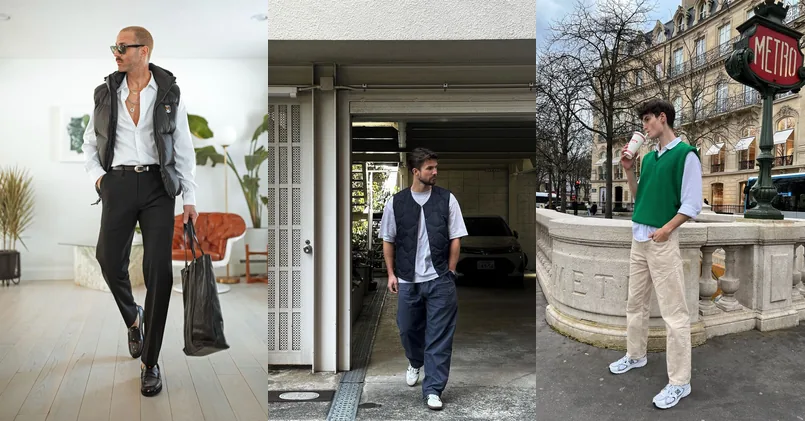
I keep seeing the vest go wrong in two directions, which is where mens fashion with vest actually splits. Either the vest is part of a matching three-piece suit and it looks right, or the vest is a standalone piece thrown over a random shirt and it looks like a bartender at a themed bar. The difference is understanding what a vest does to an outfit: it adds a layer of structure between the shirt and the jacket (or between the shirt and the outside world when no jacket is involved). When that layer is chosen correctly, it upgrades the entire outfit. When it is chosen poorly, it creates a costume.
I spent two years in retail buying menswear and the vest was the piece we could never predict. Some seasons it sold out. Other seasons it sat on the rack. The men who bought vests consistently were the ones who understood the piece as a layering tool, not as a statement. They treated it the way a chef treats salt: invisible when done right, obvious when overdone.
The Formal Vest
The formal vest exists within the three-piece suit system and follows strict rules. The vest matches the suit fabric exactly. The buttons close from the bottom up, leaving the last button open. The shirt collar sits above the vest neckline. The vest back is satin or a contrasting fabric because nobody sees it under the jacket. Breaking any of these rules shifts the vest from formal to costume.
Three-Piece Suit With Matching Vest
A three-piece suit where the vest matches the jacket and trousers in fabric and color. This is the vest at its most traditional and its most powerful. The matching vest adds visual density to the torso that a two-piece suit does not have, which is why three-piece suits photograph better and command more attention in a room. The vest also allows you to remove the jacket and still look dressed because the vest maintains the formal structure. I own two three-piece suits (navy and charcoal) and the vests are the reason I reach for them over my two-piece options for events where I know photos will happen.
Contrast Vest With Suit Separates
A vest in a contrasting color or texture worn with suit separates (jacket and trousers that coordinate but do not match). The contrast vest is the move that separates a man who understands tailoring from one who follows rules. A gray vest under a navy blazer with charcoal trousers creates three complementary tones that build visual depth. The contrast only works when the colors share the same temperature (all warm or all cool) and the same formality level. A tweed vest under a worsted suit looks confused. A wool vest under a wool suit in a different shade looks intentional.
Double-Breasted Vest for Evening Events
A double-breasted vest with a formal shirt and tailored trousers for evening events. The double-breasted vest is the version that adds the most visual impact because the overlapping front creates a broader, more structured chest line. This is the vest for wedding receptions, gala events, and any occasion where the dress code says “formal” and you want to stand out without wearing anything loud. The Italian approach to the double-breasted vest is letting it be the statement piece while everything else stays quiet: white shirt, dark trousers, minimal accessories.
The Casual Vest
The casual vest takes the same layering principle from formal wear and applies it to everyday pieces. The casual vest is not a suit vest. It is a different garment: lighter fabric, more relaxed fit, often unlined, sometimes with utility details like patch pockets. The casual vest works over tees, henleys, button-downs, and turtlenecks. It does not work over dress shirts with a tie (that combination requires a formal vest).
Vest Over Button-Down With Rolled Sleeves
A vest over a button-down shirt with rolled sleeves, chinos, and loafers or clean boots. This is the smart-casual vest formula that works for dinner reservations, gallery openings, and any setting between formal and fully casual. The rolled sleeves signal that this is not a suit situation. The vest provides the structure that the exposed forearms remove. The combination creates a specific energy: competent, relaxed, and deliberate. I wear this combination more than any other vest look because it covers the widest range of social contexts without adjustment.
Vest With Tee and Jeans
A casual vest over a plain tee with jeans and boots. This is the vest combination that either works perfectly or fails completely, with no middle ground. It works when the vest is soft (linen, lightweight cotton, unstructured wool) and the jeans are clean and well-fitting. It fails when the vest is stiff or shiny (suit fabric) because the formality mismatch between the structured vest and the casual jeans creates confusion about the outfit’s intention. Soft vest, clean jeans, good boots. That is the formula. Nothing else required.
Denim or Utility Vest as Casual Layer
A denim or utility vest over a henley or plain tee with cargo pants or relaxed chinos. The denim vest is the casual vest that carries the least formality, which makes it the safest entry point for men who have never worn a vest outside of a suit. The utility version (multiple pockets, heavier cotton, sometimes waxed) borrows from workwear and outdoor traditions, which means it has built-in credibility in casual settings. I keep a dark denim vest from Levi’s in my rotation specifically for spring and fall layering when a jacket is too much and a tee alone is not enough.
The Sweater Vest Renaissance
The sweater vest returned to menswear around 2021 and has stayed because it solves a real problem: how to layer in transitional weather without adding bulk. A knit vest over a collared shirt adds warmth to the torso without restricting arm movement or adding sleeve bulk under a jacket. The Korean menswear influence pushed the sweater vest back into streetwear and it has not left.
Cable-Knit Vest Over Oxford Shirt
A cable-knit vest in cream or oatmeal over a light blue or white Oxford shirt with chinos and loafers. This is the preppy-academic vest look that looks smart without being formal. The cable-knit texture adds visual interest that a flat knit does not. The Oxford shirt collar framing the neckline is the detail that makes the outfit look styled rather than accidental. I recommend this combination to every guy who asks “how do I look put together without wearing a blazer?” because the sweater vest does the job the blazer would do, with half the formality and none of the restriction.
Oversized Knit Vest Over Turtleneck
An oversized knit vest over a fitted turtleneck with tailored trousers. The oversized vest over a fitted base is the proportion play that Korean and Japanese streetwear popularized. The volume of the vest creates a visual frame around the torso while the turtleneck keeps the neck and collar area clean. This combination is the cold-weather vest formula that works for creative offices, weekend outings, and any context where you want to look styled without looking dressed up. The key is the turtleneck: it fills the neckline of the vest and prevents the “missing collar” problem that a crewneck tee creates under a deep V-neck vest.
Minimal Knit Vest With Short-Sleeve Shirt
A fitted knit vest over a short-sleeve button-down or camp collar shirt for warm weather. The warm-weather vest is the version most men skip because they assume vests are for cold months. The thin knit vest (cotton or linen blend) over a short-sleeve shirt adds the layering dimension that a shirt alone cannot provide. The exposed arms keep you cool. The vest keeps you looking polished. This is the summer wedding, outdoor dinner, and vacation-with-nice-restaurants vest combination. Cotton vests from Uniqlo or COS in navy, gray, or cream run about $30 to $40 and handle every warm-weather layering situation.
Puffer and Quilted Vests
The puffer vest is the outdoor version that crossed into everyday fashion because it solves the same problem as a suit vest (torso coverage, arm freedom) with insulation. The puffer vest works when it is treated as outerwear, not as a fashion layer. Over a hoodie, over a flannel, over a denim jacket. It does not work over a dress shirt because the formality gap is too wide.
Quilted Vest Over Flannel or Hoodie
A quilted or puffer vest over a flannel shirt or hoodie with jeans and boots. This is the vest combination that handles outdoor activities, weekend errands, and casual meetups in fall and winter. The quilted texture adds visual warmth that a smooth vest does not. The flannel or hoodie underneath provides the casual base that matches the vest’s outdoor DNA. I own a Patagonia quilted vest in black that has become the piece I throw on over anything when I need one more layer. At about $120, it is the most cost-effective outerwear piece I have bought because it works from October through April.
Lightweight Puffer Vest for Transitional Weather
A lightweight puffer vest over a long-sleeve tee or thin sweater for transitional weather. The lightweight puffer (not the winter-weight version) is the vest for early fall and late spring when a jacket is unnecessary but a single layer is not enough. It packs flat, weighs almost nothing, and adds just enough insulation for morning commutes and evening walks. The slim profile means it layers under a coat in winter too, which doubles its usefulness. Navy, olive, and black are the three colors that handle every combination.
Suit vest, then the knit
Own three vests: one tailored vest in charcoal or navy (for formal and smart-casual), one sweater vest in cream or gray (for preppy-casual and office), and one quilted vest in black or olive (for outerwear layering). Those three cover every vest situation from weddings to weekends. Add a white Oxford shirt, a fitted turtleneck, and a plain tee, and the three vests produce nine distinct combinations. The tailored vest costs $40 to $80 at Zara or SuitSupply. The sweater vest runs $25 to $50 at Uniqlo or H&M. The quilted vest is $80 to $150 from Patagonia, North Face, or Barbour. Total investment under $300 for a layering system that works year-round.
Can you wear a vest without a jacket?
Yes. A tailored vest works over a button-down for smart-casual settings. A sweater vest works over a collared shirt for preppy-casual. The key is matching the vest formality to the rest of the outfit.
What shirt goes under a vest?
For formal vests: dress shirt with a spread or point collar. For casual vests: button-down, henley, or plain tee. For sweater vests: Oxford shirt or turtleneck. The collar choice changes the formality more than the vest itself.