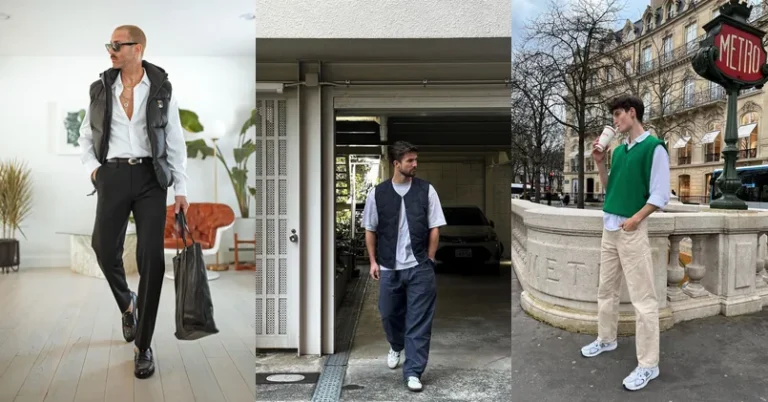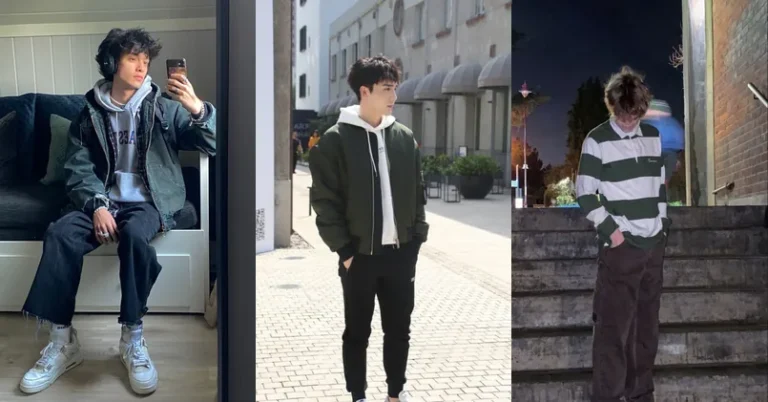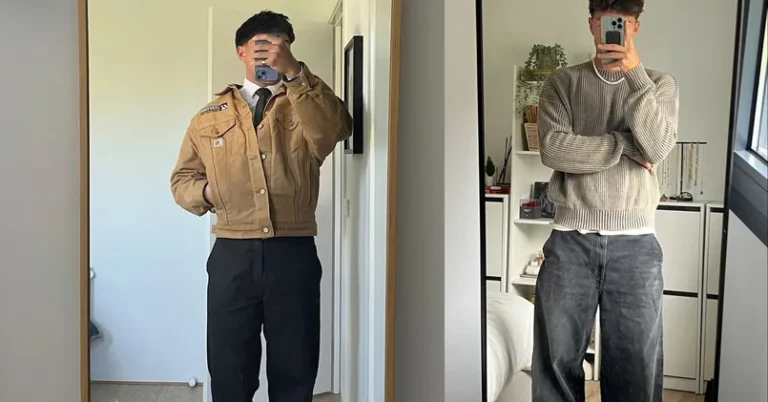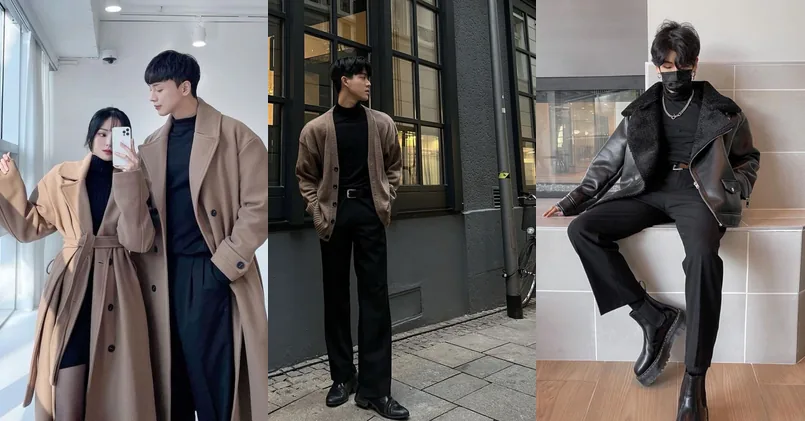
Korean fashion for men at street level is different from the polished, tonal version you see in most guides. The street side is louder, wider, and more willing to play with volume. Where Korean smart casual builds on smooth neutrals and controlled proportions, Korean street style takes those same principles and pushes them: bigger jackets, wider pants, bolder layering, and accessories that do real visual work.
I got interested in the street version when I noticed that the outfits I kept saving on Pinterest were not the clean, minimal ones. They were the ones where someone was wearing a massive coat over cargo pants with chunky sneakers and a crossbody bag, and somehow it looked considered rather than random. The logic behind that “somehow” is what this guide is about.
Oversized Proportions Done Right
Korean street fashion uses oversized fits more deliberately than most Western streetwear. The pieces are big, but they relate to each other in proportion. An oversized top with wide bottoms works because both halves match in volume. An oversized top with slim bottoms works because the contrast is intentional. The combinations that fail are the ones where the volume looks accidental.
Oversized Blazer With Wide Cargo Pants
An oversized blazer with wide cargo pants and chunky sneakers. This is the silhouette that defines Korean street style right now. The blazer has dropped shoulders and a boxy body that sits away from the torso. The cargo pants continue that volume downward. The chunky sneakers anchor the bottom with enough visual weight to balance the width above. I tried this proportion for the first time about a year ago with a thrifted blazer two sizes up, and the difference from my normal fitted blazer was immediate. The oversized version looked intentional. The fitted one just looked like work clothes.
Relaxed Hoodie With Wide Dark Pants
A relaxed hoodie with wide dark pants and clean sneakers. The hoodie is not gym-sized oversized. It has just enough room that the shoulders drop slightly and the body hangs without clinging. Korean street style hoodies tend to be boxier than American ones, which means the fabric falls straight from the shoulder rather than tapering to the waist. That straight fall is the silhouette difference. If you are buying a hoodie for this look, size up one from your normal size and look for a boxy cut rather than a fitted one.
Long Coat Over Layered Base
A long overcoat over a layered hoodie-and-shirt combination with wide pants. The coat creates a vertical line from shoulder to mid-thigh that unifies the layering underneath. Without the coat, the layers might look bulky. With it, they look structured. The length matters: Korean street coats typically fall below the knee, which is longer than most Western overcoats. That extra length is what creates the columnar silhouette that photographs so well in Seoul street style.
Puffer Jacket With Relaxed Trousers
An oversized puffer jacket with relaxed trousers and sneakers. Puffer jackets in Korean street fashion are worn bigger than in Western contexts. The extra volume creates a rounded, almost sculptural top half that contrasts with the straight-leg pant below. I think the puffer is the easiest entry point into Korean street proportions because it is already designed to be voluminous. You do not need to size up. You just need to let the jacket be big without trying to make it look fitted.
Accessories as Architecture
Korean street fashion treats accessories differently from most aesthetics. They are not decorative additions. They are structural elements that change how the outfit reads. A crossbody bag adds a diagonal line across the chest. A bucket hat changes the top of the silhouette. A visible belt breaks the vertical line at the waist. Each accessory is solving a visual problem, not just “completing the look.”
Crossbody Bag Over Oversized Jacket
A crossbody bag worn over an oversized jacket. The bag strap creates a diagonal line from one shoulder to the opposite hip, which breaks the boxy monotony of an oversized top. Without the bag, the jacket is just big. With it, the jacket has a focal point. I own three crossbody bags in different sizes specifically for this purpose, and the small ones (roughly the size of a paperback book) work best because they add the line without adding bulk. Brands like Carhartt WIP and Uniqlo make affordable options that hold up.
Bucket Hat With Neutral Layers
A bucket hat with a layered neutral outfit. The hat changes the outline of the head, which in turn changes the proportions of the entire outfit. A bucket hat makes the head rounder, which pairs well with the boxy, rounded silhouettes that Korean street fashion favors. A cap would create a different line (forward, angular). A beanie would create another (vertical, compressed). The hat choice is a proportion decision, not just a style one. I wear bucket hats in warmer months and beanies in winter, and the outfit reads differently with each one even when the clothes are identical.
Chunky Sneakers as Proportion Anchors
Chunky sneakers with wide pants. The sneaker sole needs enough height and width to support the visual weight of wide-leg pants above it. A thin-soled sneaker under wide pants makes the feet look small and the outfit look unfinished. New Balance 530 and 550, Nike Air Force 1, and Adidas Ozweego are all chunky enough to anchor Korean street proportions. The color should be neutral (white, gray, black) so the sneaker supports the outfit without competing with the layers above.
Color and Pattern in Korean Street Style
Korean street fashion uses color more boldly than the smart casual version. Where Korean minimalism stays in beige and gray, street style introduces black as a dominant base, adds occasional color pops (red, blue, green through a single piece), and uses graphic prints more freely. The rule is still “controlled,” but the controls are looser.
All-Black With One Color Accent
An all-black outfit with one colored accessory or layer: a red bag, a green cap, a blue scarf. The all-black base absorbs the color accent and makes it the instant focal point. This is the easiest way to introduce color into Korean street outfits without risking a clash. One color, everything else black. The accent should be small enough that it punctuates rather than dominates. A brightly colored bag works. A brightly colored jacket does too, but it changes the entire outfit mood rather than accentuating it.
Graphic Tee Under Open Jacket
A graphic tee visible under an open jacket or shirt. The graphic is the statement. The jacket frames it. The pants and shoes stay neutral. This is Korean street style’s version of the one-statement-piece rule: the tee does the talking, everything else steps back. The graphic should be visible but not overwhelming. A logo, a small print, or a text element. Not an all-over print that competes with the jacket layer above it.
Mixed Neutrals With Texture Contrast
Multiple neutral pieces in different textures: a matte cotton tee, a nylon jacket, corduroy pants, leather sneakers. Four different surface textures in the same color family. This is the technique that makes monochrome outfits look rich rather than flat. Each fabric catches light differently, creating visual depth without color variation. I think this is the most sophisticated Korean street technique because it requires no bold choices but the result looks more considered than any graphic or color accent.
Everyday Adaptations
Full Korean street style is a going-out look. But the principles scale down beautifully for everyday wear. Keep the proportions (slightly oversized), keep the neutral base, add one accessory (crossbody bag or hat), and the outfit reads as Korean-influenced without being a full aesthetic statement.
Simple Tee With Wide Pants and Clean Sneakers
A plain tee with wide pants and white sneakers. This is Korean street style at minimum volume. No layers, no accessories, just proportion. The tee sits slightly loose. The pants are wide but not baggy. The sneakers are clean. Three pieces, and the outfit looks more intentional than a fitted tee with slim jeans would, because the proportion choices are deliberate. This is my weekday default when I want to look good without thinking about it for more than a minute.
Overshirt With Joggers and Sneakers
A lightweight overshirt over a tee with joggers and sneakers. The overshirt is the everyday layering piece that replaces the blazer or coat. It adds a layer without weight, and the open front creates the layered look that Korean fashion depends on. Joggers are acceptable in Korean street style as long as they taper or fall straight rather than bunching at the ankle. The sneaker should be clean and chunky enough to balance the pant width. This is the outfit that bridges Japanese casual and Korean street: relaxed, layered, neutral, proportioned.
Building the Korean Street Wardrobe
Start with five pieces: a boxy hoodie in black or gray, wide dark pants, chunky white sneakers, a crossbody bag, and one oversized jacket (denim, nylon, or blazer). Those five items cover the core silhouettes in this guide. Add a bucket hat for warm weather, a long coat for winter, and a graphic tee for variety. The entire starter wardrobe costs $200 to $300 from Uniqlo, Zara, and one thrifted jacket. The proportions matter more than the brands. Buy one size up from normal and let the fabric hang. That is the foundation.
Frequently Asked Questions
What is the difference between Korean street style and Korean minimalism?
Korean minimalism uses smooth textures, tonal palettes, and clean fits. Korean street style uses oversized proportions, bolder accessories (crossbody bags, bucket hats), and more volume. Street is louder and more experimental; minimalism is quieter and more controlled.
What sneakers work best for Korean street fashion?
Chunky sneakers with a visible sole. New Balance 530 and 550, Nike Air Force 1, and Adidas Ozweego are popular choices. The sole needs enough height and width to anchor wide-leg pants visually. Avoid slim, low-profile sneakers.
How do you make Korean street fashion work outside of Seoul?
Focus on proportions rather than specific brands or pieces. Slightly oversized tops, wide pants, chunky sneakers, and one accessory (crossbody bag or hat) translates anywhere. The style reads as modern and intentional in any city.
Is Korean fashion men different from K-pop fashion?
Yes. K-pop fashion is performance-oriented: bold colors, statement pieces, and deliberately attention-seeking. Korean street and casual fashion is quieter: neutral palettes, proportional play, and everyday wearability. They share some overlap in sneaker culture and oversized fits but the intent is different.