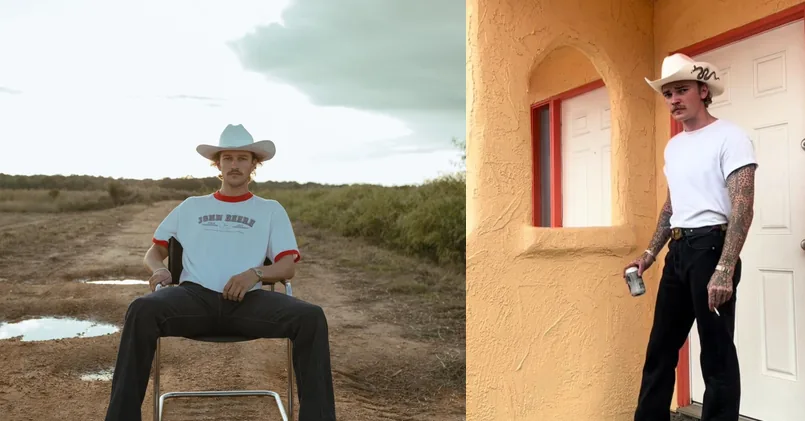
Pinterest keeps cycling boots and denim, which is where Western fashion men actually show up now, because the look gives you permission to wear texture. Suede, denim, leather, corduroy, chambray. Western style is built on fabrics that have weight and character, and that is exactly what makes it interesting as a daily aesthetic rather than a costume for a rodeo.
The key insight is that western fashion for men is not about looking like a cowboy. It is about borrowing specific elements, a hat, a boot shape, a denim wash, a belt, and letting those elements anchor an otherwise modern outfit. Here is how to do it without tipping into costume territory.
What defines western menswear
Western menswear grew out of working ranch clothing in the American West: sturdy denim, leather, and felt built for riding and weather. Details such as the cowboy boot, the pearl-snap shirt, and the decorated belt buckle were later popularized by film, music, and rodeo culture, as outlined in this overview of western wear. Today the look works best as a small number of borrowed elements in an otherwise modern outfit.
Key pieces
- Cowboy or western-style boots with a slight heel
- Denim or chambray shirt
- Dark or straight-leg jeans
- Leather belt with a visible buckle
- Suede jacket or vest
- Wide-brim hat
- Sherpa-lined denim jacket for winter
Palette and fabrics
Indigo, tan, brown, rust, olive, and cream make up the palette, with black for the urban version. Fabrics lean on suede, raw and washed denim, chambray, flannel, corduroy, shearling, and heavy leather.
Classic Western Essentials
The core western wardrobe is surprisingly small: a good pair of boots, a well-fitting denim or chambray shirt, dark jeans, a leather belt with a visible buckle, and optionally a hat. These five pieces recombine into dozens of outfits. The quality of each piece matters more than the quantity.
Suede Jacket With Wide-Brim Hat
Image: Pinterest
A dark suede jacket, white shirt, high-waisted dark pants, and a wide-brim hat. This is the outfit that best shows how to do western in a city. The suede jacket carries the entire aesthetic. The hat confirms it. Everything else is clean and modern. The patterned neckerchief adds a detail at the neck that fills the gap between the shirt collar and the jacket lapel. It is the kind of look where people notice the outfit, not just a single piece of it.
Brown Button-Up With Cowboy Boots
Image: Pinterest
A brown button-up over a white tank, blue jeans, tan cowboy boots. The simplest version of the look. The boots are the anchor. Cowboy boots change the posture of any outfit because they add height and angle the foot slightly forward, which straightens the leg line. Blue jeans are the natural pairing because the indigo and brown leather tones have been photographed together for a century. It just works. Tousled hair, relaxed fit, nothing trying too hard.
Denim-on-Denim With Leather Belt
Image: Pinterest
A denim jacket with jeans. The “Canadian tuxedo” that western fashion claims without apology. The trick to making double denim work is varying the wash: light jacket with dark jeans, or dark jacket with medium-wash jeans. Same shade top and bottom flattens the outfit. Different shades create a visual break at the waist. The leather belt is essential here because it provides that break point. Without it, the two denim pieces merge into one blue mass.
Plaid Shirt With Distressed Denim
Image: Pinterest
A plaid flannel with distressed jeans and boots. Plaid is the western pattern. It borrows from ranching and logging heritage and translates directly into everyday wear. The distressed jeans add age and character that complement the ruggedness of the flannel. Keep the plaid in earthy colors: brown, rust, forest green, not bright red. Muted plaids look western. Bright plaids look like a lumberjack costume. The distinction matters if the aesthetic should feel integrated rather than performed.
Urban Western: City Adaptation
Western fashion does not require a ranch. The best modern interpretations take one or two western elements and place them in an otherwise urban outfit. A cowboy boot with black jeans and a leather jacket. A bolo tie with a plain white shirt. These hybrid looks are where the aesthetic has the most room to grow.
Black Wide-Brim Hat With Statement Jacket
Image: Pinterest
A black wide-brim hat with a statement jacket, distressed jeans, and cowboy boots in a city setting. The urban backdrop is what makes this work as fashion rather than costume. Western pieces in an urban context create friction, and that friction is what gives the outfit its edge. The hat is the boldest element here. Not everyone will wear a wide-brim in the city, but for anyone who can carry it, it is the single most powerful western signifier to add to any outfit.
Olive Jacket With Straight Jeans and Boots
Image: Pinterest
An olive field jacket over a plain tee with straight-leg jeans and leather boots. This is western at its most subtle. The only explicitly western element is the boot, and even that could pass as a heritage fashion piece. The combination proves that western fashion for men does not require a hat or a belt buckle to register. Sometimes the boot alone carries enough character. The olive jacket adds a military-adjacent layer that blends seamlessly with the ranching influence.
Leather Jacket With Dark Denim
Image: Pinterest
A leather jacket, dark jeans, and western-style boots. The leather jacket pulls the look from ranch into rock. This is the crossover point between western and grunge fashion, and it is a natural overlap. Both aesthetics value leather, worn textures, and a certain ruggedness. The difference is intent: grunge is chaotic and layered, western is clean and structured. This outfit lives closer to the western side because the fit is deliberate and the boots are polished.
Texture and Layering
The thing that makes western fashion photographically interesting is texture. Suede absorbs light differently than denim. Leather reflects. Corduroy catches shadow in its ridges. Layering these textures creates visual richness that solid-color minimalist outfits cannot match.
Layered Denim With Sherpa-Lined Jacket
Image: Pinterest
A sherpa-lined denim jacket over a dark base. The sherpa collar adds a textural contrast at the neck that catches the eye immediately. This is a cold-weather western staple, and it has crossed so thoroughly into mainstream fashion that most people do not even register it as western anymore. But its roots are in ranching outerwear, and the texture combination of denim and shearling is as western as it gets. It works as a layer from October through March.
Suede Vest Over Chambray Shirt
Image: Pinterest
Suede vest, chambray shirt, dark jeans. Three different textures in one outfit, all in the same earth-tone family. The vest adds structure to the shoulders without the commitment of a full jacket, and the chambray provides that slightly faded blue that looks inherently western. Pair this with a good pair of boots and a simple leather belt. The outfit does not need more. The textures carry it.
Corduroy Jacket With Henley
Image: Pinterest
A corduroy jacket over a henley shirt with jeans and boots. Corduroy is the fabric that nods to western heritage while staying firmly modern. The ribbed texture catches light in a way that gives the jacket dimension. The henley adds a buttoned detail at the neck that feels more considered than a plain crew. Together, they create a layered look that could work on a ranch or at a restaurant, which is exactly the versatility western fashion should aim for.
Boots first, then the denim
Start with three pieces: cowboy boots (or a western-style boot with a pointed toe and a slight heel), a denim or chambray shirt, and a leather belt with a visible buckle. Those three items turn any pair of jeans and any plain tee into a western-leaning outfit. From there, add a suede jacket, a wide-brim hat if you are bold enough, and a sherpa-lined denim jacket for winter. The aesthetic builds on itself because every piece works with every other piece.
The budget version works just as well. Thrift stores in the American Southwest are full of western shirts, belts, and boots for a fraction of retail. The patina of used leather and worn denim is an asset in this aesthetic, not a compromise. Western fashion is one of the few styles where looking a little worn is the point.