Corporate outfits are the hardest category to get right because the margin between looking polished and looking costumey is razor thin. The air conditioning is always set for someone else. The lighting is always fluorescent. And the outfit that looked perfect at home falls apart the moment you sit down at a desk for eight hours.
This guide focuses on outfits that suit offices, meetings, and corporate events rather than editorial shoots. Every look here is judged on whether it can handle a conference room, a cold commute, and a laptop bag slung over one shoulder.
The Tailored Trouser Base
Tailored trousers are the foundation of every corporate wardrobe because they solve the most problems at once: they look professional, they survive sitting, and they make the top half almost irrelevant. Get the trouser right and the rest writes itself.
Blue Shirt and Cream Wide-Legs
Image: Pinterest
A pale blue button-down tucked into cream wide-leg trousers with a thin belt and a structured black bag. This is the kind of outfit that ends overthinking corporate dressing. The light blue and cream combination reads polished without reading severe. The wide leg provides enough fabric to stay warm in aggressive air conditioning.
Striped Polo and Brown Trousers
Image: Pinterest
A striped polo blouse with brown wide-leg trousers and a matching brown belt. The polo collar adds a casual element that works better in modern offices than a stiff button-down. Brown trousers are underused in corporate settings because most people default to black or gray, but brown reads warmer and more approachable. A pair of chocolate brown trousers is a good pick for days that call for looking professional without looking cold.
Two Tops, Same Beige Pants
Image: Pinterest
A white button-down and a blue sleeveless knit, both paired with the same beige tailored trousers. This side-by-side is the best argument for investing in one great pair of neutral trousers. One pair of neutral trousers can carry five or more different tops in a single week. The white shirt version reads more traditional. The blue knit version reads more modern. Same pants, two completely different impressions.
V-Neck Cardigan Over White Shirt
Image: Pinterest
A black V-neck cardigan layered over a white collared shirt with cream wide-leg trousers and pointed flats. The collar poking out from the cardigan is the detail that elevates this from basic to intentional. A cardigan over a collared shirt can look more put-together than a blazer. The trick is keeping the cardigan fitted so it reads as a layer, not a blanket.
Paper Bag Waist on the Street
Image: Pinterest
A black fitted tee with taupe paper-bag waist trousers and white sneakers on a cobblestone street. This outfit sits right on the border between corporate and casual, and in most modern offices it would pass. The paper-bag waist adds visual interest at the midsection that a flat-front trouser cannot match. In a creative agency it would not draw a second glance. The structured bag and sunglasses push it toward weekend, but swap the sneakers for loafers and it lands in the office.
Black Sweater and Brown Wides
Image: Pinterest
A black crewneck sweater with brown wide-leg trousers and white sneakers. This leans smart casual rather than strictly corporate, but it belongs here because it represents what most modern offices look like on a regular Wednesday. Not every corporate environment requires a blazer. Some require looking like you care, and a well-fitted sweater over tailored trousers communicates exactly that. The sneakers are the giveaway that this is not a boardroom outfit, but they are increasingly accepted.
The Blazer as Power Piece
A blazer turns any combination into corporate. It is the single most powerful piece in professional dressing because it adds structure, authority, and a layer of warmth that solves the cold-office problem immediately.
Navy Blazer and Camel Wide-Legs
Image: Pinterest
A navy blazer over a navy tee with camel wide-leg trousers and a brown leather belt. The navy-and-camel combination is one of the most reliable corporate palettes because it reads as intentional without reading as stark. It is a strong choice for interviews. The wide-leg trouser keeps it modern. A tapered pant would make this look like a uniform.
Taupe Suit With Sneakers
Image: Pinterest
A taupe blazer with matching wide-leg trousers, a black tee, and two-tone sneakers in an office setting. The matching set is the easiest corporate formula because the coordination is built in. The sneakers are bold for corporate, but in this context they work because the rest of the outfit is so clearly structured. A matching suit in a neutral tone is the answer for days with no energy to think about what goes together. The blazer handles the authority. The sneakers handle the comfort.
White Shirt and Navy Blazer
Image: Pinterest
A navy blazer over a white button-down with black tailored trousers and black pumps in a glass-walled office. This is the corporate outfit that needs no explanation. Every element is a classic. The belt is thin and black. The fit is precise. This combination is a staple of professional wardrobes, and the only variable is whether the blazer is navy or black. Navy reads softer, which makes it the better pick on presentation days.
Beige Blazer With White Shirt
Image: Pinterest
A beige blazer over a white blouse with black wide-leg trousers and black pumps in a hallway. The beige blazer is the piece that converts corporate outfits from serious to approachable. It reads as calm in a meeting. The color reads warm without reading casual. Paired with black below the waist, the contrast is clean enough for any dress code.
Black Blazer and Gray Trousers
Image: Pinterest
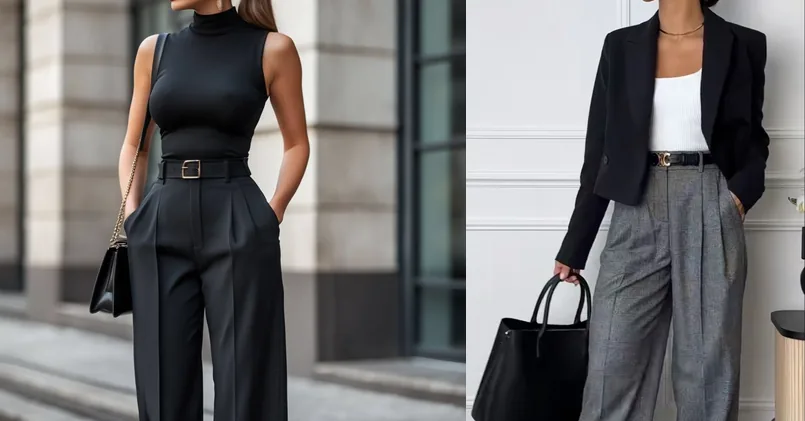
A black cropped blazer over a white tank with gray wide-leg trousers, a gold belt, and a structured black bag. The cropped blazer length shows the belt, which becomes the accent piece. A cropped blazer can look too trendy for work, but it is not. The shorter length works with high-waisted trousers because the proportions are balanced: short on top, long on the bottom, defined at the waist.
Striped Cardigan Jacket
Image: Pinterest
A black-and-white striped cropped cardigan jacket over a black fitted top with black wide-leg trousers and a statement belt. The stripe adds the visual interest that a solid black blazer lacks. A piece like this works as a hard-working layer because it functions as both a blazer and a cardigan. In a cold office, that dual purpose matters. The gold belt buckle is the only warm tone in the outfit and it draws the eye exactly where it should.
Shirts and Blouses That Do the Work
When the blazer stays on the back of the chair, the blouse becomes the entire outfit. The right blouse carries enough formality to stand alone in a corporate setting.
Bow Blouse and Black Trousers
Image: Pinterest
A cream bow-neck blouse with black tailored trousers, glasses, and a burgundy bag. The bow at the neck is a classic corporate detail that is underused because people associate it with vintage secretarial looks. In practice, a modern bow blouse reads as confident and feminine. The glasses add a layer of seriousness, which suits a board presentation.
Pussy-Bow Satin and Navy Pants
Image: Pinterest
A champagne satin pussy-bow blouse with navy tailored trousers and nude pumps. The satin fabric adds the elevation that cotton or polyester cannot match. In a fluorescent-lit office, satin catches light in a way that makes the outfit look more expensive than it is. A satin blouse is the first choice for any meeting that calls for polish without a blazer. The nude pumps disappear and let the blouse do the talking.
Navy Stripes and Wide Trousers
Image: Pinterest
A navy-and-white striped button-down with black wide-leg trousers and pointed mules. The striped shirt is one of the most reliable patterns in corporate settings because vertical stripes elongate without distracting. The white bag adds a crisp contrast. This outfit demonstrates that corporate dressing does not require a blazer if the shirt carries enough structure. The collar and cuffs do the job.
Gray Knit and Navy Tailored
Image: Pinterest
A gray crewneck knit with navy tailored trousers, a thin black belt, and white sneakers. The knit is the cold-office solution that blazer-allergic people need. A fitted crewneck in a fine gauge reads as a blouse alternative rather than weekend wear. Three similar knits in gray, black, and navy paired with the same trousers make an easy rotation. The white sneakers are casual for some offices, but loafers or ballet flats swap in without changing anything else.
The Dress Shortcut
A corporate dress eliminates the coordination problem entirely. One piece, done. The trick is choosing a dress with enough structure that it reads as a deliberate choice rather than a default.
Black Midi in the Boardroom
Image: Pinterest
A black mock-neck long-sleeve midi dress with gold accessories in a wood-paneled office with a city view. This is the dress that makes people assume you have a meeting even when you do not. The mock neck covers enough to feel warm in air conditioning. The midi length is appropriate for every corporate setting. A dress like this is the emergency outfit for mornings that need a polished look in five minutes.
Navy Sheath in the Elevator
Image: Pinterest
A navy V-neck sheath dress with heels, photographed in an elevator. The sheath dress is the most corporate silhouette that exists, and navy is the color that makes it feel less funereal than black. The fit is everything with a sheath: too tight reads uncomfortable, too loose reads sloppy, exactly right reads like you planned it. It is worth trying several similar dresses until the waist sits at the natural waist.
All-Black Turtleneck and Belt
Image: Pinterest
A black sleeveless turtleneck with black wide-leg trousers and a statement belt on a city sidewalk. Technically separates, but the monochrome reads as a one-piece outfit. The belt is the detail that holds this together. Without it, the turtleneck and trousers are two anonymous pieces. With it, there is a defined waist and a focal point. This formula suits after-work events that call for a corporate look with enough comfort to walk to dinner.
All-Black With Wide-Leg Flow
Image: Pinterest
A black turtleneck with black wide-leg trousers, a logo belt, and a structured bag. The all-black version of corporate is the default when authority is the goal and thought is in short supply. Every element is simple. The turtleneck provides warmth. The wide-leg provides movement. The belt provides the only detail. The simplicity works like armor for a negotiation. Nobody looks at what you are wearing when everything is black. They look at your face.
Black Mock-Neck Maxi
Image: Pinterest
A black mock-neck maxi dress with a belt and a structured bag on a street. This leans more elegant event than daily corporate, though similar dresses suit formal offices such as finance. The ankle length provides maximum coverage and warmth, which makes it a genuine option for cold offices. The silhouette is striking enough that no blazer is needed. Add a cropped blazer for a meeting and leave it off at the desk.
Skirts and Layered Pieces
Skirts and layering pieces like vests and pinafores add variety to a corporate wardrobe without breaking dress codes. The key is keeping the hemline appropriate and the layers structured.
Pinafore Dress Two Ways
Image: Pinterest
Image: Pinterest
A brown ribbed pinafore over a white collared shirt, and a navy pinafore over a blue collared shirt. Two versions of the same formula, and both read as immediately corporate. The pinafore dress is an underrated layering piece. It solves the “what do I wear over a button-down” question without defaulting to a blazer. The collared shirt underneath keeps it formal. The navy version with a blue shirt is the stronger combination because the tonal layering reads more sophisticated.
Printed Top and Pencil Skirt
Image: Pinterest
A black-and-white geometric print top with a navy pencil skirt and pointed flats on a city sidewalk. The pencil skirt is the most traditional corporate bottom and the print top is the one element that breaks it from boring. A useful rule for printed tops in corporate settings: if the print is black-and-white or navy-and-white, it reads as pattern, not as loud. The pencil skirt anchors it.
Chevron Vest Over White Shirt
Image: Pinterest
A chevron-pattern knit vest over a white button-down with gray tailored trousers and yellow pointed pumps. The vest is the layering piece that solves cold offices without the bulk of a blazer. The chevron pattern adds visual interest to an otherwise standard white-and-gray combination. The yellow shoes are a bold choice for corporate, but they work because everything else is neutral. This works for a creative agency as shown, and for a law firm with black shoes instead.
Bomber Jacket and Satin Skirt
Image: Pinterest
A cream bomber-style jacket over a black satin midi skirt with white sneakers. This pushes the boundary of corporate into smart casual, and it belongs here because many modern offices now operate at this register. The satin skirt keeps the formality. The bomber jacket adds the casual layer. The sneakers confirm that this is a workplace that values comfort alongside appearance. Not every corporate environment requires pumps and blazers, and this outfit acknowledges that reality.
Where Corporate Meets Warmth
Cold offices require strategy, not just style. These outfits prioritize warmth through fabric weight, layering, and coverage without sacrificing the polished look.
Striped Turtleneck and Flares
Image: Pinterest
A black-and-white striped turtleneck with black wide-leg trousers and pointed boots. The turtleneck is the ultimate cold-office piece and the stripes keep it from reading as a basic black layer. The flared trouser leg over pointed boots creates a long vertical line that makes the whole outfit look taller. This combination is a smart pick for the coldest days because the wool-blend turtleneck generates its own warmth and the wide trousers feel like wearing blankets while looking professional.
Navy Bomber and Gray Wides
Image: Pinterest
A navy bomber jacket over a white crop top with gray wide-leg trousers and sneakers. The bomber jacket is not traditionally corporate, but the navy color and the structured trousers pull it close enough for modern offices. This is the smart casual version of corporate warmth because the jacket provides insulation that a blazer sometimes cannot match. The gray trousers and white top keep the palette professional.
Cowl Top and Navy Trousers
Image: Pinterest
A cream cowl-neck sleeveless top with navy wide-leg trousers and nude pointed flats. The cowl neck adds a draping detail that makes this feel more designed than a simple tank. Indoor air conditioning can make a sleeveless choice a mistake. Always carry a blazer or a structured cardigan when the corporate dress code is sleeveless. The outfit itself is beautiful. The goosebumps are not.
FAQ
What counts as corporate dress code?
Corporate dress code means structured, professional clothing: blazers, tailored trousers, pencil skirts, blouses, closed-toe shoes, and neutral colors. It sits above business casual, which allows knits, loafers, and more relaxed fabrics. When in doubt, add a blazer.
Can you wear sneakers with corporate outfits?
Clean white leather sneakers are accepted in many modern offices with business casual or smart casual codes. For strictly corporate environments, stick to pumps, loafers, or pointed flats. The sneaker works best when the rest of the outfit is clearly structured.
How do you stay warm in a cold office?
Layer a fitted knit or turtleneck under your blazer. Wool trousers insulate better than polyester. Keep a structured cardigan or blazer at your desk. Scarves work if the office is genuinely frigid. The key is layering with fitted pieces so the silhouette stays clean.
What colors work best for corporate outfits?
Navy, black, gray, white, cream, camel, and taupe form the corporate core. Burgundy, olive, and deep green work as accent colors. Avoid neon, bright red, and loud prints in traditional corporate settings. Pattern is fine in small doses: pinstripes, subtle checks, or a printed blouse under a solid blazer.