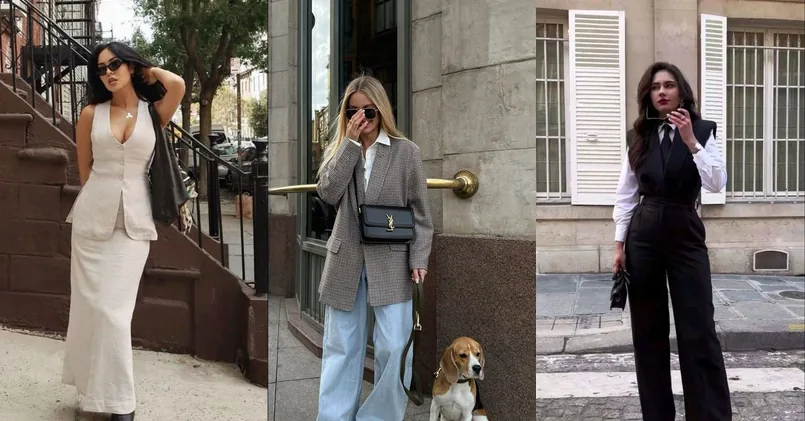
Corporate baddie is not a second outfit after 6. It is the trousers, the vest, and the shoe that can move from a desk to the sidewalk without a change in a bathroom. This guide sorts the look by what actually makes it work: the waistband, the white shirt, the structured jacket, and the sneaker or heel that finishes it.
What defines corporate baddie
Corporate baddie takes the polish of office dressing and adds the confidence of the baddie aesthetic: sharp lines, a fitted or high-waisted shape, strong accessories, and groomed details. It borrows from classic business casual and the strong-shoulder logic of power dressing, then relaxes it with softer fabrics, a vest instead of a blazer, or a platform sneaker instead of a pump. The result still reads as work, but it looks chosen rather than inherited from a dress code.
Key pieces
- High-waisted wide-leg trousers in tan, cream, or black
- A structured vest or waistcoat that replaces the second layer
- A crisp white shirt or a clean fitted tee
- A structured blazer with a real shoulder, especially over denim
- One strong shoe: a pointed heel, a leopard pump, or a platform sneaker
- A structured bag that reads as an office bag, not a weekend tote
Palette and fabrics
The palette stays tight: black, white, cream, tan, navy, and brown, with one louder piece at most. Fabrics matter more than colors here. Crepe, twill, tailored cotton, and heavier knits hold a crease and fall cleanly, while thin jersey and soft unlined jackets tend to look unfinished next to a sharp trouser.
The trousers do the desk
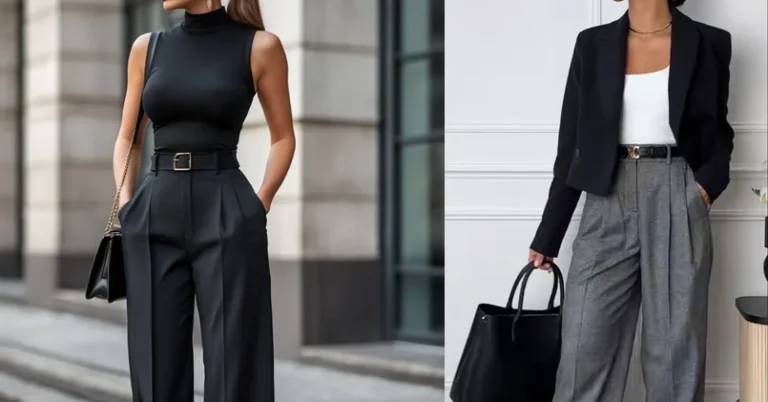
If the pants have a waist that stays comfortable until 4 p.m., the top can be a simple tank. Tailored trousers are what keep the rest of the outfit from looking casual, and they matter more than the top in most of these looks.
White Tank, Tan Trousers
Image: Pinterest
A ribbed mock-neck is tucked into tan wide-leg trousers, which makes this the clearest example of corporate baddie working through the bottom half: high waist, clean fall, nothing to tug at. The silver ruffle bag is the only shiny thing, and gold hoops finish it. A navy jacket over this would flatten the beige, so it is best left off unless the office is freezing.
Brown Top, Cream Trousers
Image: Pinterest
A draped brown top is a good answer when black starts to feel like a uniform. Cream wide-leg trousers catch the light in a conference room full of charcoal, and the approach is closer to how wide leg pants work than to another navy pair. The brown bag matches on purpose. Most people would add a blazer here, but the neckline is already the sharp line, so it is better without one.
Black without a matching jacket
All-black is not automatically a suit. It can be a vest and a tie, or a tee and jeans where the heel is the only office signal.
Black Vest, White Shirt
Image: Pinterest
A vest and tie work better here than a matching jacket, which would feel like costume. The white shirt and the pointed heel do more work than a second black layer would. Sunglasses are better held in the hand than worn on the head. This is corporate baddie with a waistcoat instead of a blazer, closer to a corporate outfits desk look than to a night-out suit. The red lip is optional. The vest is not.
Black Tee, Black Jeans
Image: Pinterest
A black tee and black jeans are the answer for a day with no jacket that still needs to look finished. A high ponytail, rectangular sunglasses, and a slouchy bag that is not a tote complete it. Strappy heels are the only dress-code cheat. Most people would call this weekend wear, but it holds up through a late lunch even if the office never required a lapel.
Cream, then navy, then stop
Color for corporate baddie usually means cream or navy rather than a loud shade. One strong piece is enough. Everything else stays quiet so the outfit still looks like work.
Cream Vest, Matching Skirt
Image: Pinterest
A cream vest with a matching maxi is a lighter option when trousers feel heavy in summer. Black pointed boots stop it from reading like a linen beach set. The black tote is the office bag, and sunglasses stay. A short cream skirt would be a different story. This length is how a co-ord reaches a desk without needing an explanation.
Navy Set, Tailored Shorts
Image: Pinterest
A navy boxy top with tailored shorts is the hot-weather version of the look, ideal when the AC fails and the calendar still says client. Tan T-strap sandals, a tan bag, and gold on both wrists keep it polished. The shorts have a real waistband, which is the only reason they count as corporate baddie and not a patio outfit. A bank interview calls for the vest. A showroom visit suits this.
Denim under a real blazer
Jeans only work once the blazer is structured. Soft unlined jackets over denim tend to look like the real coat got lost on the way in.
Pinstripe Blazer, Straight Jeans
Image: Pinterest
A pinstripe blazer over a tucked white shirt is the easiest way to make jeans office-ready. The straight medium-wash pair stops at the ankle so the two-tone ballet flats show, which is a better match for this stripe than a sneaker. A thin black belt and a small bag are enough metal. This blazer has a real shoulder, so the jean can stay.
Check Blazer, Wide Jeans
Image: Pinterest
A check blazer works for a day split between a video meeting and a long walk. The white shirt and baggy light-wash jeans are the weekend half. The black crossbody at the waist is the office half. Wide denim under a structured jacket is a proportion that holds up, while skinny jeans under the same blazer tend to look like Saturday pants in disguise.
Heel, sneaker, or neither
Pick the shoe last: a leopard heel, a platform sneaker, or Sambas under a skirt. The rest of the outfit should survive whichever one wins.
White Mini, Leopard Heels
Image: Pinterest
A white shift and leopard pumps suit a presentation in a room full of navy suits where trousers would blend in. A gold quilted bag and a low bun keep the focus on the shoe. The mini is structured, not floaty, which is the only reason it counts as corporate baddie. A long white dress would be the safer choice. This one is the better risk.
White Tee, Platform Sneakers
Image: Pinterest
A white logo tee with creased white trousers and chunky black-and-white platforms is the right call for a lunch that is not a pitch, where heels would feel overdressed. A braid keeps the hair simple. The tailoring is what keeps the tee from looking like errands. Plain white sneakers would disappear, while these platforms hold their own.
White Blazer, Samba Skirt
Image: Pinterest
A white blazer draped over the shoulders is a smart choice in humid weather when sleeves feel like too much. Pair it with a taupe mock-neck, a black maxi, white Sambas, and a small monogram bag. A heel under a long black skirt is the default, but the sneaker wins when the walk after the last call is longer than the meeting. The blazer still signals work, and the stripe on the shoe is the only sport touch it needs.
After the last meeting
Does it need a heel?
Not if the trouser is tailored and the bag is structured. The tan wide-leg, the cream pant, and the Samba skirt all work without a pump. Keep one leopard heel for rooms that already decided the dress code is formal. A sneaker in those rooms can read as a protest. Everywhere else, the waistband does more work than the shoe.
If the office is navy
Then it is better not to fight navy with a loud shade. Cream trousers, a brown top, or a black vest over a white shirt all stand out more quietly. For a panel that is closer to an interview than a regular Tuesday, the vest is a better call than a dress, in the same spirit as a corporate interview outfit when the room is unknown. Navy on navy disappears. One cream column does not.