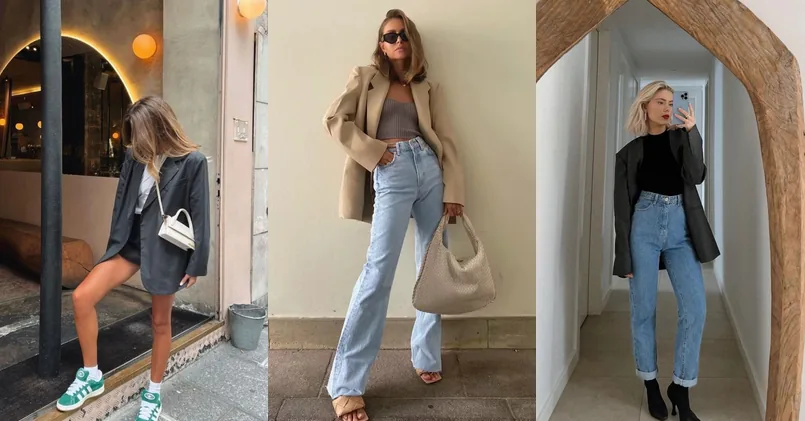
Most women own a blazer they rarely wear, and it is not because blazer outfits lack range. The problem is that most people style it one way (over a blouse with trousers) and never explore the other combinations it supports. A blazer works with jeans, shorts, dresses, athleisure, and evening looks, and each aesthetic wears it differently: streetwear, old money, baddie, minimalist, and everything in between.
The blazer is not formal. The blazer is structural. It adds shoulder definition and a clean line to whatever sits under it, and that structure is what makes any outfit look finished. This guide shows how each style uses that structure.
Streetwear and Casual: The Oversized Blazer
The oversized blazer is the silhouette that changed how women wear this piece. Instead of fitted and corporate, the oversized version drapes past the hips, drops the shoulder, and creates a relaxed shape that works with casual pieces. The key is proportion: the bigger the blazer, the slimmer the bottom should be to maintain a visible shape.
Oversized Blazer With White Shirt and Sneakers
Image: Pinterest
An oversized blazer over a white button-down shirt with slim pants and colorful sneakers. The sneakers are the conversion point that shifts this from corporate to street. Without the sneakers, this is a job interview outfit. With them, it is a Saturday brunch look. The sneaker-and-blazer combination is one of the most useful styling tricks in women’s fashion because it works across age groups and body types. The blazer does the dressing up. The sneakers do the dressing down. Together, they land in a middle ground that requires no explanation.
Gray Oversized Blazer With Dark Base
Image: Pinterest
A gray oversized blazer over an all-dark base: black top, dark jeans or leggings, and boots. Gray is the best color for a first blazer because it works with more base colors than black (which can look too corporate) or navy (which limits bottom options). Gray sits in the middle: it pairs with black, white, cream, denim, and brown without looking mismatched. The oversized fit over a dark base creates a monochromatic column that looks intentional and urban.
Denim Blazer With Casual Base
Image: Pinterest
A denim blazer over a casual outfit. The denim version softens the blazer’s formality by bringing it into casual territory through fabric alone. It layers over tees, tanks, and even sundresses without feeling forced. A light-wash denim blazer is especially useful for travel because it replaces both a jacket and a styling piece: it provides warmth on planes and adds structure to hotel-room outfits. For more denim layering ideas, see the denim vest outfit guide.
Old Money and Corporate: The Fitted Blazer
The fitted blazer is the classic. It hugs the waist, defines the shoulder, and creates an hourglass proportion that works particularly well for corporate settings and polished evening looks. The fitted version requires more attention to size: too tight and it pulls at the buttons, too loose and it loses the shape that makes it work.
Black Fitted Blazer With Slim Trousers
Image: Pinterest
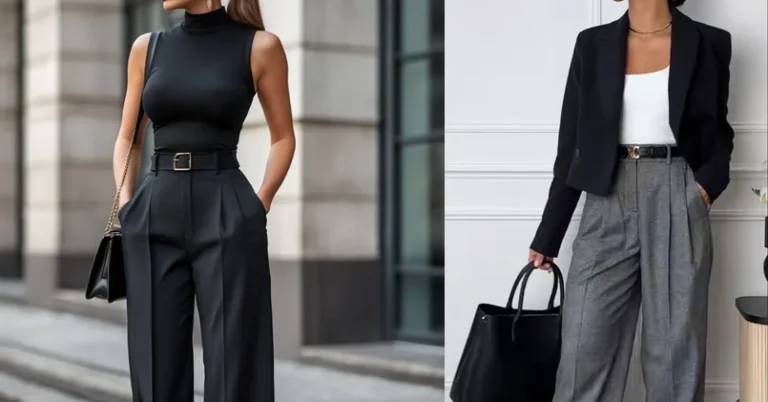
A fitted black blazer with slim black trousers and a simple top. The matched blazer suit is the power combination that has not changed in decades because the proportions are inherently flattering: the fitted jacket narrows the waist, and the slim trousers extend the leg line. This works for presentations, client meetings, and any occasion that calls for authority. The trick is to keep the top underneath simple (a camisole or a thin knit) so the blazer’s line is not disrupted by bulk underneath.
Classy Blazer With High-Waisted Trousers
Image: Pinterest
A fitted blazer with high-waisted wide-leg trousers. The wide trouser changes the silhouette from corporate to editorial: the fitted top half and the flowing bottom half create a proportion that photographers love. It suits fashion events and gallery openings because it feels creative rather than corporate. The old money influence is visible here: structured upper body, flowing lower body, minimal accessories.
Y2K and Lifestyle: Blazer With a Cap
Blazer With Cap and Structured Look
Image: Pinterest
A fitted blazer with a baseball cap. The cap disrupts the formality of the blazer in the same way sneakers do, but at the other end of the body. It pulls the eye up and immediately codes the outfit as casual despite the structured jacket. This combination works for anyone who wants the blazer’s shape benefits without its corporate connotations. The pairing is popular on Pinterest and TikTok as a way of treating the blazer as a lifestyle piece rather than a work piece.
Baddie and Evening: Blazer for Going Out
The blazer as a going-out piece works because it provides the structure that date night outfits and evening looks often need. Over a mini dress, with biker shorts, or paired with leather pants, the blazer adds an architectural element that takes casual evening pieces into polished territory. For more of the sharper side, see casual chic baddie outfits.
Black Blazer Over Slip Dress
Image: Pinterest
A black blazer over a slip dress with heels. The blazer-over-dress combination is the easiest evening formula because the dress handles the femininity and the blazer handles the structure. A slip dress alone can feel exposed. A blazer over it adds coverage at the shoulder and creates a layered depth that makes the outfit look more considered. It lands at the right level for a gallery opening: more than jeans, less than a cocktail dress.
Elegant Blazer With Leather Pants
Image: Pinterest
A blazer with leather or faux-leather pants and heeled boots. Leather and blazer together create an outfit that is sharper than either piece alone. The leather adds edge. The blazer adds polish. Together, the combination reads as “going somewhere and looking good when arriving.” The blazer should be fitted for this pairing because an oversized blazer with leather pants creates too much volume and the sharpness gets lost.
Seasonal Blazer Styling
The blazer works in every season with fabric adjustments. Linen and unlined cotton for summer, wool blends for winter, and medium-weight gabardine for spring and fall. The silhouette stays the same. The fabric handles the temperature.
Summer Blazer With Shorts
Image: Pinterest
A lightweight blazer with tailored shorts and sandals. This is the summer blazer formula: the blazer provides structure while the shorts and sandals keep it seasonal. The shorts should be tailored (not denim cutoffs) so the formality level stays consistent across the outfit. A linen or cotton blazer in a neutral color works best here because heavier fabrics with shorts look disconnected.
Beige Blazer With All-Neutral Base
Image: Pinterest
A beige or camel blazer over an all-neutral outfit. The beige blazer is the warm-weather alternative to black or gray, and it feels softer and more approachable. It pairs with white, cream, light denim, and brown. An affordable high-street beige blazer is often the most-worn jacket in a wardrobe because it works with everything from jeans to a midi skirt, and its cost-per-wear is hard to beat.
Fall Blazer With Layered Knit
Image: Pinterest
A gray blazer over a knit sweater with trousers for fall. Layering a thin knit under a blazer extends the piece into cold weather without adding a coat. The knit provides warmth. The blazer provides the silhouette. This combination works from October through March in most climates and avoids the lumpy look that winter dressing under a coat often creates. Choose a thin knit that sits flat under the blazer. Chunky cable knits bunch up and ruin the shoulder line.
Gray oversized, black fitted
Start with two blazers: one black (fitted) and one gray or beige (oversized). The black handles professional days and sharper office looks. The gray or beige handles casual and weekend. From there, add a third in a different fabric: denim for summer, corduroy for fall, or leather for edge. Three blazers with a solid base wardrobe of tees, trousers, and jeans create more outfit combinations than most people realize. The blazer is the multiplier piece: it doubles the contexts where every other item in a closet can be worn.
How should a blazer fit a woman?
The shoulder seam should sit at or just past the natural shoulder. The blazer should button without pulling at the waist. Sleeves should end at the wrist bone, showing a bit of shirt cuff underneath. Oversized blazers follow different rules: the dropped shoulder and longer length are intentional.
What color blazer is most versatile?
Gray. It pairs with more colors than black (which can look too formal) or navy (which limits bottom options). Gray works with black, white, cream, denim, and brown. Beige is the second most versatile, particularly for warm weather.
Should you size up in a blazer?
For an oversized look, size up one to two sizes. The blazer should hang past the hips with dropped shoulders. For a fitted look, buy your true size and ensure it buttons cleanly at the waist without pulling. Try both and decide which silhouette works for your wardrobe.