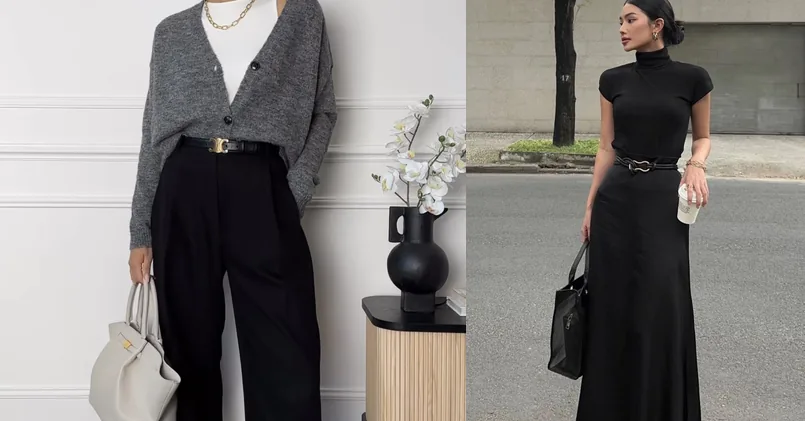
Business casual outfits for work live in a gap that most guides skip. Not jeans Friday. Not a suit. The floor is looking like you meant to show up. The ceiling is not looking like you are presenting to the board. This is the category that falls flat when it is styled like cute office Pinterest instead of like clothes that survive a crowded subway commute.
This post is formulas, not a mood board. If a full suit is required, that is a different register, covered in the guide to corporate outfits. If you want edge after hours, that is another post. Here the focus stays in the middle: what repeats, what to skip, and when the look fails in a real office.
The Register Most Offices Mean
When a handbook says business casual, it is usually describing a feeling, not a garment list. Offices read business casual very differently depending on the industry. Agency, media, and hybrid teams took fine knits, straight trousers, and loafers. Finance took suiting and closed-toe pumps. This register is the first group. If your office still expects a jacket every day, you are not in this category, and forcing it will look unfinished rather than relaxed.
The test is simple. Could this outfit get through a two-hour internal meeting and a walk to a lunch that might include a client without drawing a comment on the clothes? Comment is the failure. Silence is the goal. Does your office actually mean jeans, or does it mean not a suit? Those are not the same request, and treating them as one is how people show up underdressed on a Tuesday.
Most people overthink this part. They copy a blazer look, drop the jacket, and call it casual. An unfinished suit is not business casual. The knit or the shirt has to complete the neckline the blazer was covering. That is the whole difference, and it is the most common mistake on the commute into the office towers.
A cotton tee under a leftover blazer reads as an afterthought; a merino crew would be the correct finish. The top has to do the work the jacket used to do.
Formulas That Repeat Weekly
Four combinations are enough. Rotate them until they get boring, which is how a working rotation functions. The pieces that last are never the clever ones.
Fine Knit Plus Trouser
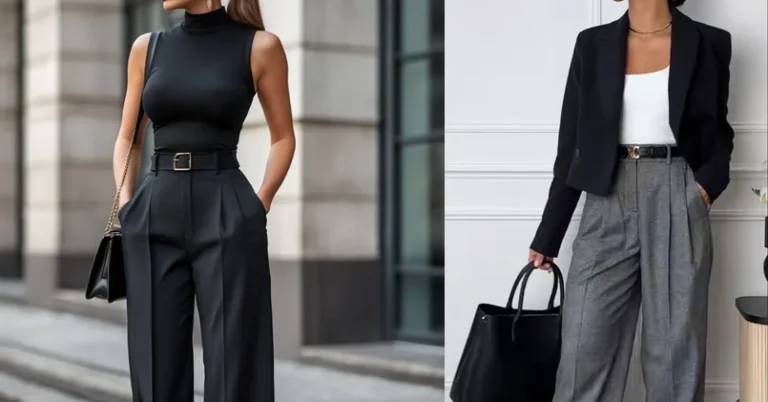
A fine-gauge merino or cotton crew, tucked or half-tucked into a straight or slightly wide trouser, with a leather loafer. Uniqlo Extra Fine Merino in navy or camel is a reliable choice because it looks more expensive than it is and resists pilling if washed cold. Pair it with a taupe or charcoal trouser that has a real crease, not jersey work pants. The knit is doing the polish. The trouser is doing the structure. Nothing else needs to perform.
This suits hybrid days that involve a subway ride, a walk, a long sit, and maybe a client visit. Humidity in July, AC that could store meat. The merino holds. A cotton tee under a leftover jacket does not. If only one work formula remained, this would be it.
Shirt With Soft Tailoring
A crisp shirt can still sit in this register as long as everything else is not a suit. White or light blue poplin, sleeves pushed once, into a mid-rise trouser with a belt that matches the shoe leather. Skip the novelty print blouse. Those read as party tops, not office tops. What holds it is proportion: fitted through the shoulder, ease through the body, a pant that is not skinny.
Two good Uniqlo or COS shirts beat a drawer of fun office tops. Fun is what people reach for when they do not trust the formula. A pointed collar plus a soft trouser is enough personality for a Wednesday.
Dark Denim Exception
Jeans are not the default. They are a permission you earn with everything else. Dark rinse, no rip, no whisker spray, a hem that hits the shoe. Wear this only with a structured knit or a tucked shirt and a loafer or a clean leather sneaker, never with a graphic tee. Most people get this wrong because they treat dark denim as a magic pass. It is not. If the top is sloppy, you are in casual Friday, and that is a different contract with the room.
Dark denim with a slouchy sweatshirt reads as weekend, even at a client appointment. Same jean, tucked poplin, loafer: the look passes. The jean did not change. Everything else in the formula did the work. That is the only denim rule worth trusting for an office dress code that claims to be relaxed.
Skirt With a Knit
A midi or knee pencil in a matte fabric, not satin. Satin belongs at events. A fine knit tucked in, opaque tights if the office is cold, a block heel or a loafer. Mini length with a crop is not this register. A mini with a crop is hard to sit in on a crowded train. If you cannot sit, commute, and stand at a standup without tugging, it is not workwear.
Pieces Worth Buying Once
Anchor pieces, not a forty-item haul. Shop for pieces that will be worn weekly, not pieces that will sit. A $40 merino that looks finished beats a $180 blouse that needs a jacket to make sense.
Trousers first. Aritzia Effortless Pant in a wool blend, or a COS wide-leg in charcoal, usually $80 to $150. Jersey travel pants with a drawstring look like lounge, even in black. An office team can read them as working from home. Drawstring is the tell.
Knitwear second. Uniqlo merino, or Sezane’s Marilou if you want one nicer crew. Fine gauge. A chunky cable is weekend, no matter how expensive it was. The surface has to be calm enough to sit next to a laptop without suggesting a ski trip.
Shoes third. A black loafer with quiet hardware and a sole that survives city sidewalks is the pick. Pointed pumps belong in interviews and events. White chunky sneakers pull the whole thing into athleisure, which is a different closet. If your office already lives in sneakers, a leather tennis shoe can work. A running shoe cannot.
Bag: a structured tote in black or dark brown leather. A nylon backpack fights a loafer. Pick one language and stay in it. A simple leather tote that holds a laptop without collapsing is worth it, because a slouchy bag makes a clean trouser look accidental.
Skip these every season: khaki chinos in that yellow-green twill. Under office lights they look like intern uniform. Stone, taupe, or olive in a softer drape is a different garment with the same outline. Do not confuse the two. Smart casual on a lookbook is not the same as khaki that photographs like a picnic.
Occasions Where This Fits
Internal days. Hybrid days. Vendor meetings where you are not on a stage. Client-light Tuesdays. The day you have three Zoom calls and one walk to a coffee. That is the job this closet is for.
If you are walking into an interview, do not raid this formula. First impressions want a tighter register, covered in interview outfits. Business casual succeeds when the room already knows you and you need to look consistent, not ceremonial.
If the night is a mixer or a dinner with tablecloths, you need a different finish. Event clothes are allowed to catch light. These clothes are not. Keep those two closets separate, and use the event guide for the satin and the pointed heel.
The real-world version of this is unglamorous. The outfit has to walk. It needs pockets. It needs a bag that holds a laptop without collapsing. If an outfit only works between the elevator and the desk, it fails the week. That is a stricter test than a mirror, and it is why merino and a trouser with movement beat a lined jacket that gets peeled off by 10:30.
Where The Look Fails
Most failures are register mistakes, not missing trends. Contrary to what you see in every saved board, taking pieces from three different work aesthetics and averaging them does not land in the middle. It lands in confusion. Slightly too simple beats slightly too many ideas.
Taking a suit and removing the blazer is the first failure. You are left with trousers and a shell that was never meant to be seen. Put a finished knit or a real shirt on the body, or keep the jacket on and admit you are in corporate. There is no bonus point for looking like part of the outfit was forgotten.
Weekend denim with a nice top is the second. A graphic tee, a slouchy sweatshirt, or a cropped tank does not become work because the jean is dark. The top has to carry the same weight as the trouser would. This is still the most common mistake on the walk from the subway: dark jean, weekend top, work bag. The bag cannot rescue it.
A bodycon dress plus a cardigan is the third. The cardigan is not a permit. If the dress was built for Saturday, it stays Saturday. This one comes back every fall. It photographed well. It did not survive a full day of sitting, and the knit layer just advertised the problem.
Loud pattern shirts are the fourth. They eat the face in a meeting. A solid poplin and a small earring beat it. Open-toe sandals in a carpeted office are the fifth. Conference chairs and feet are a bad pairing. A loafer or a closed mule solves it without turning the outfit into a pump situation.
The last failure is splitting the difference with corporate baddie. If you want that edge, commit to it. A too-tight top with loafers and a tote is not a formula. It is two aesthetics arguing. Pick a register and let the other one live in its own post.
The combination that lasts the workday is boring on purpose. That is not a failure of imagination. It is how a work rotation holds up. The quiet pieces keep getting worn. The clever ones did not. If you remember one thing, remember the neckline. Finish it with a knit or a shirt that was designed to be seen. Then pick a trouser with a crease, a shoe that can walk a city, and stop adding.