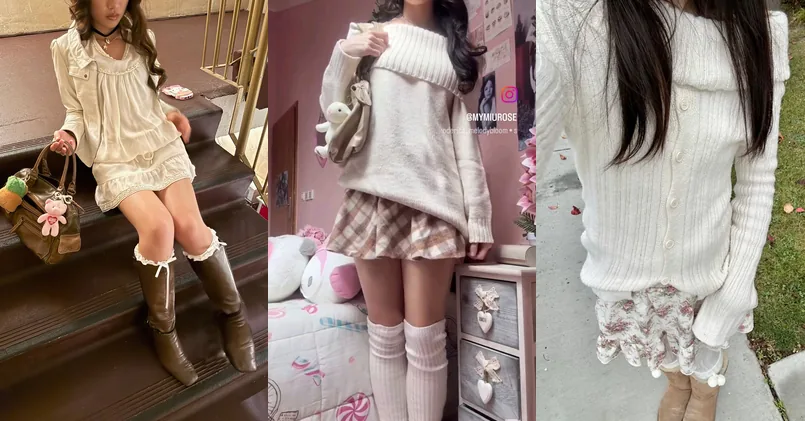
Himekaji is the J-fashion style that solves a problem most other substyles ignore: how to look princess without looking like a costume on the train. The name literally translates to princess casual. Lace, ribbons, ruffles, florals, all the romantic details, but applied to pieces you can actually wear to a cafe, a bookstore, or a class.
The label most associated with himekaji is Liz Lisa. Its pieces look like normal clothes until you notice the lace trim, the ribbon detail at the collar, the slightly exaggerated puff sleeve. That is the entire philosophy: princess details hidden inside casual silhouettes.
What Defines Himekaji
Himekaji comes from the Japanese street-fashion world around gyaru, where hime gyaru (princess gyaru) favored lace, ribbons, and heavy glamour. Himekaji keeps the romantic details and drops the full-glam extremes, so the styling works for ordinary days. For wider context, see the overview of Japanese street fashion.
Key pieces
- A cream or pink cable-knit cardigan
- A lace camisole or lace-trimmed blouse
- A tiered, ruffled, or plaid mini skirt
- Knee socks or leg warmers with lace or ribbon trim
- Brown boots or platform sneakers
- A small bag with a plush charm or a novelty shape
- Ribbons, bows, or a beret as the finishing detail
Palette & fabrics
The palette is soft: cream, blush, dusty rose, baby pink, and lavender, with chocolate brown as the grounding color in the choco-kaji version. Fabrics lean tactile, with cable knit, lace, satin ribbon, plaid wool, and faux fur trim for winter. Keep the colors close in tone and let the textures supply the interest.
The Cream and Lace Foundation
Cream, ivory, and off-white are the himekaji base colors because they read as soft and romantic without the childishness of pure white. Lace is the defining texture. Every outfit in this section starts with a cream or white piece and builds outward.
Cable Knit Cardigan and Floral Mini
Image: Pinterest
A cream cable-knit cardigan over a lace camisole with a brown floral mini skirt, lace-trimmed knee socks, and brown boots. This is the outfit that explains himekaji. Every piece is technically casual. A cardigan, a cami, a skirt, boots. But the lace trim on the socks, the floral print, and the cable knit texture push it into princess territory. The brown tones ground the look so it does not read as bridal.
Lace Tunic and Riding Boots
Image: Pinterest
A cream lace tunic with brown riding boots and a vintage bag with a plush keychain. The tunic is the piece that carries this outfit. The lace is delicate enough to look expensive but the silhouette is oversized enough to feel comfortable. The bag with the plush charm adds the playful element that himekaji always needs. Without it, this could read as boho. With it, the aesthetic is clear.
Button-Front Cardigan and Lace Hem
Image: Pinterest
A cream ribbed button-front cardigan over a floral lace-hem skirt with beige boots. The cardigan is buttoned all the way, which gives it a clean line that contrasts with the lace detail peeking out below. This is the most reliable himekaji trick: a structured top half with a romantic bottom half. The lace hem is just visible enough to signal the aesthetic without overwhelming the outfit.
Floral Dress and Cream Cardigan
Image: Pinterest
A cream knit cardigan over a tiny floral print dress with a crossbody bag and loafers. The floral dress is the most versatile himekaji base piece because it works alone in summer and under layers in every other season. The oversized cardigan draped over the shoulders is intentionally relaxed. This look works for an afternoon tea and feels perfectly appropriate there. The crossbody bag keeps it young and casual.
Cream Knit and Printed Skirt
Image: Pinterest
A cream cable-knit cardigan over a floral printed skirt with a beret and platform sneakers. The beret is the accessory that pushes this from “girl in a cardigan” to “girl who knows J-fashion.” Platform sneakers are common in himekaji because they add height without the discomfort of heels, and they balance out the volume of the skirt. A pair of cream platforms is worth keeping specifically for himekaji outfits.
Pink and Pastel Layers
Pink is the himekaji signature color. Not hot pink, not neon, but dusty rose, blush, and baby pink. The layering in this section shows how to build a pastel outfit without tipping into dessert territory.
Off-Shoulder Knit and Plaid Mini
Image: Pinterest
A cream off-shoulder oversized knit with a pink plaid mini skirt and knee-high socks. The off-shoulder detail is romantic without being revealing. The plaid skirt adds the schoolgirl element that himekaji borrows from gyaru fashion. The stuffed animal bag charm is the kind of detail that makes himekaji recognizable. At a Harajuku street fair, this outfit would blend in perfectly, which is the highest compliment in J-fashion.
Pink Ruffle Blouse and Plaid Skirt
Image: Pinterest
A pink puff-sleeve ruffle blouse with a brown plaid tiered skirt, shown flat-lay. The blouse has the princess details: puff sleeves, front ruffles, a ribbon at the collar. The plaid skirt grounds it. It helps to photograph himekaji outfits flat before wearing them, because the detail work is often invisible on a body. This flat-lay shows the lace edging on the skirt that would disappear in a mirror selfie.
Pink Lace Cardigan and Floral Layers
Image: Pinterest
A pink lace open cardigan over a floral ruffle top with blue denim shorts. The pink lace is sheer enough to show the floral layer underneath, creating the depth that himekaji relies on. Most Western fashion avoids this level of layering because it reads as “too much.” In himekaji, “too much” is the starting point. The denim shorts are the concession to practicality that makes this wearable outside a photo shoot.
Pink Ruffled Knit and Lace Skirt
Image: Pinterest
A pink ruffled button-front knit over a white lace mini skirt with socks and sandals. The pink knit has the front ruffle detail that is the himekaji equivalent of a blazer: it adds structure and interest to an otherwise simple silhouette. The white lace skirt is the most useful piece in a himekaji wardrobe because it pairs with literally everything. Pink, cream, brown, lavender, any soft tone works above it.
White Cardigan and Ruffle Mini
Image: Pinterest
A white open cardigan over a pink ruched top with a white ruffle mini skirt and brown boots. The boots are key here. Without them, this outfit reads as pure sweet. With the brown leather boots, there is an edge that balances the ruffles. Call this “himekaji with grounding”: the approach for wanting the aesthetic while still walking more than three blocks.
Pink Jacket and Lace Camisole
Image: Pinterest
A dusty pink jacket over a white lace camisole with blue flare jeans. This pushes the boundary of himekaji into everyday fashion, and it is included specifically because the jeans are unusual for the style. Traditional himekaji avoids denim because it reads too Western and casual. But this outfit proves that a lace camisole and a pink jacket carry enough princess energy to offset the jeans. It would not suit a J-fashion meetup, but it works well for dinner with friends who do not know what himekaji means.
Chocolate and Earth Tones
Choco-kaji is the brown-toned branch of himekaji that trades pink sweetness for a warmer, more vintage feeling. Brown boots, chocolate plaids, and caramel knits replace the pastel palette while keeping all the princess details intact.
Brown Polyvore Coordinate
Image: Pinterest
A cream off-shoulder knit with a brown plaid ruffle skirt, a piano keyboard bag, brown boots, a newsboy cap, and a brown scarf. This flat-lay is a textbook choco-kaji coordinate. Every piece contributes a texture: the knit, the plaid, the suede boots, the woven scarf. The piano bag is the kind of novelty accessory that himekaji embraces and minimalism would reject. Collecting vintage novelty bags is part of the fun for exactly this reason.
White Blouse and Chocolate Tiered Skirt
Image: Pinterest
A white ruffle blouse with a chocolate brown tiered skirt, patterned tights, and leg warmers over brown shoes. The leg warmers are one of the most recognizable himekaji accessories. They add volume at the ankle that balances the volume of the skirt, and they keep your legs warm when the skirt is short. Leg warmers from October through March transform even a basic outfit into something that reads as J-fashion.
Choco Plaid and Fur-Trimmed Jacket
Image: Pinterest
A caramel jacket with fur trim over a plaid top, a brown mini skirt, patterned tights, and brown boots with fur accents. This is full choco-kaji and it works because every piece is in the same brown family. The fur trim adds the luxury element that distinguishes himekaji from regular casual. Real fur is not necessary: faux fur trim on collars and boots is one of the easiest ways to add the hime-princess feeling to winter outfits.
Floral Smock Top and Brown Skort
Image: Pinterest
A floral smock top in muted tones with a brown tiered skort and dark tights. The muted color palette is less typical for himekaji but it works in an “autumn hime” context. The floral print is small and vintage-looking rather than bright and bold. I think this outfit represents how himekaji adapts to seasons: the same romantic silhouettes in warmer, earthier tones for fall and winter.
Gingham Babydoll and Riding Boots
Image: Pinterest
A brown gingham babydoll top with chocolate shorts and riding boots in a park. This leans toward cottagecore as much as himekaji, and that is worth saying plainly. The gingham print, the outdoor setting, and the green juice all read more countryside than Harajuku. But the babydoll silhouette, the riding boots, and the lace edge on the sleeve hem are himekaji signals. The crossover between these two styles is real and increasingly common among people who wear both.
The Full Himekaji Coordinate
A full himekaji coordinate means every element is intentional: the outfit, the bag, the shoes, the hair accessories, the legwear. These looks represent the style at its most committed.
Twelve Outfit Grid
Image: Pinterest
A grid of twelve complete himekaji coordinates on mannequins, showing the range from pink lace to brown blazer combinations. This image is a strong himekaji reference because it demonstrates how the same aesthetic principles, ruffles, layers, bows, soft colors, produce completely different outfits. The brown blazer coordinate in the top right proves that himekaji is not limited to skirts. The pink ruffle combinations in the middle row show the style at its most recognizable.
Floral Peplum on the Street
Image: Pinterest
A floral peplum top with shorts, white socks, and pink platform shoes on a Harajuku street. This is vintage himekaji from the era when the style was at peak visibility. The peplum silhouette creates the waist definition that himekaji always prioritizes. The pink platforms are period-correct and still one of the most fun shoe choices in the style. A similar pair of pink platforms makes every outfit look more intentional.
White Fur Cape Coordinate
Image: Pinterest
A white faux-fur cape over a white lace coordinate with white fur leg warmers and platform boots. This is himekaji at maximum volume and I love it. The all-white palette reads as winter princess. The fur textures at the cape and legs frame the lace in the middle. This is not a grocery store outfit, but for a J-fashion event or a themed photo shoot, this level of commitment is what makes the style culture interesting. Himekaji is at its best when it is not apologizing for being too much.
Camel Coat and Knee Socks
Image: Pinterest
A camel button-front coat with white knee-high socks and brown platform shoes. The coat is the piece that makes himekaji work in cold weather. A structured coat over a mini skirt with knee socks is one of the most iconic himekaji silhouettes. The camel tone is versatile enough for daily wear and the coat length, hitting just above the knee, is chosen specifically to show the socks underneath. That visible gap between hem and sock is part of the aesthetic.
Where Himekaji Meets Other Styles
Himekaji does not exist in isolation. It borrows from and lends to other styles constantly. These outfits sit at the intersection where himekaji overlaps with Korean fashion, coquette, and soft girl aesthetics.
Korean Bow Dress Coordinate
Image: Pinterest
A mood board showing a brown cardigan over a white bow-detail midi dress with sneakers and a shoulder bag. The text labels this as “Korean Style” and the aesthetic overlaps significantly with himekaji: the ribbon bows, the soft color palette, the delicate textures. The difference is the midi length and the sneakers, which are more K-fashion than J-fashion. It is included because the current generation of himekaji wearers often mixes Korean and Japanese influences without drawing hard boundaries. If you like this look, you will like himekaji. The aesthetic DNA is shared.
FAQ
What is himekaji?
Himekaji is a Japanese fashion substyle that combines hime (princess) elements like lace, ribbons, and ruffles with casual everyday silhouettes. It grew from the broader himegyaru movement but dropped the full-glam makeup and dramatic hair in favor of a softer, more wearable approach. Think princess details on regular clothes rather than a full costume.
What is the difference between himekaji and lolita?
Lolita fashion follows strict silhouette rules: bell-shaped skirts over petticoats, specific bodice structures, and a historical European doll aesthetic. Himekaji borrows the romantic details, lace, ribbons, ruffles, but applies them to modern casual pieces like knit cardigans, mini skirts, and boots. Himekaji is designed for daily wear. Lolita is designed for events and meetups.
Where can I buy himekaji clothing?
Liz Lisa is the most iconic himekaji brand and still available through Japanese resellers and secondhand platforms like Mercari Japan. Other brands include Ank Rouge, Honey Cinnamon, and Secret Honey. For more affordable options, Shein and Yesstyle carry pieces that work within the aesthetic. Thrift stores are surprisingly good for lace blouses and floral skirts.
Can you wear himekaji outside Japan?
Absolutely. Himekaji is one of the most wearable J-fashion styles internationally because the individual pieces, knit cardigans, plaid skirts, boots, lace blouses, do not look costumey in isolation. The key is balancing the princess elements. One or two hime details per outfit reads as personal style. Five or six reads as a costume outside Harajuku.