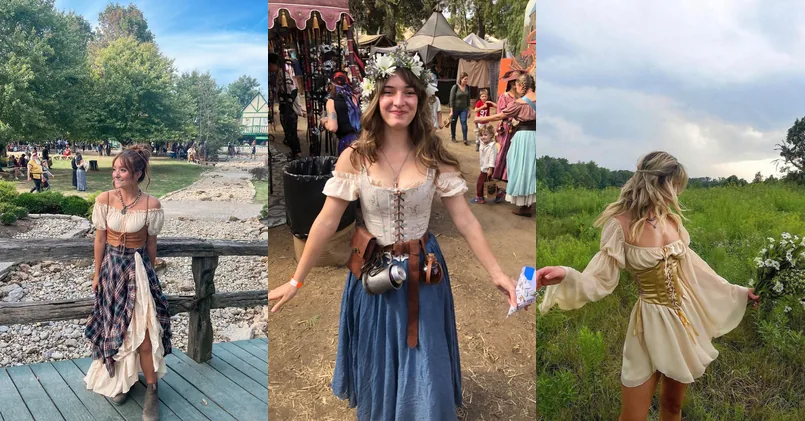
Costume and fashion overlap in ren faire outfits in a way most events do not allow. The renaissance faire is one of the few public settings where wearing a corset, a floor-length skirt, and leather accessories look appropriate rather than theatrical. That overlap is what makes dressing for one interesting: you are building an outfit that references a historical period but still needs to function for a full day of walking, eating, and standing in direct sun.
The best ren faire looks are rarely full period costume. They are modern pieces styled with historical details: a structured corset over a flowing blouse, leather boots with a long skirt, statement jewelry that references medieval metalwork without looking like a prop. Jeans and a peasant top are not quite enough, because the gap between everyday clothes and the setting shows. That middle ground between costume and outfit is where the best ren faire looks live.
What defines ren faire style
Ren faire dressing grew with the modern Renaissance fair, which began in California in the early 1960s and mixes historical reenactment, theater, and fantasy. Most outfits reference the corset and chemise silhouette of the period, then loosen the accuracy in favor of comfort and personality.
Key pieces
- Leather or fabric corset, or a fitted vest
- Peasant blouse or chemise with full sleeves
- Long gathered or layered skirt
- Wide leather belt with a pouch
- Tall leather boots
- Flower crown or statement necklace
- Poet-sleeve blouse for a dramatic variant
Palette and fabrics
Earth tones such as rust, cream, olive, and brown are the safe base, with jewel tones (burgundy, emerald, sapphire, plum) for gowns. Fabrics lean on cotton, linen, leather, brocade, and velvet, chosen to breathe through a full day outdoors.
The Corset as the Anchor Piece
The corset is the single piece that defines most ren faire outfits. It provides the silhouette, the historical reference, and the visual focus. Everything else in the outfit supports what the corset establishes. The key decision is whether you go structured (boned, lace-up, standalone) or soft (a corset-style top that suggests the shape without the rigidity).
Brown Leather Corset Over White Chemise
Image: Pinterest
A brown leather corset laced over a white chemise with a long gathered skirt. This is the ren faire template that works every single time because the color combination (brown leather against white cotton) is historically grounded and visually clean. The chemise does the comfort work: it breathes, it moves, and it provides a soft base under the corset’s structure. It is the right starting point for anyone dressing for a faire for the first time because it is forgiving on fit. The chemise hides any gaps in the corset’s lacing, and the long skirt handles any proportion question below the waist.
Black Corset With Flowing Sleeves
Image: Pinterest
A black corset paired with a blouse that has dramatic bell or poet sleeves. The sleeve volume is what separates this from regular corset styling. In everyday fashion, a corset looks like going-out wear. At a ren faire, the oversized sleeves anchor it in the period context and make the whole outfit look intentional. Black is the most common corset color at faires because it pairs with every skirt color and every blouse shade. For a single corset bought specifically for faire season, black is the practical choice over brown.
Corset Top With Layered Skirts
Image: Pinterest
A fitted corset top over multiple layered skirts in coordinating earth tones. The layered skirt is a ren faire detail that adds visual depth without adding complexity. Two skirts of different lengths (one full-length, one shorter overskirt) create movement and texture that a single skirt cannot. The earth tone palette (rust, cream, olive, brown) is historically appropriate and also happens to be the most forgiving in outdoor settings where dust and grass stains are inevitable. A white skirt is the classic mistake: it turns the afternoon into an exercise in not sitting on anything.
Peasant Blouses and Romantic Layers
The peasant blouse is the second most important piece after the corset. It provides the sleeve drama, the neckline interest, and the historical silhouette that everything else builds around. The best ren faire blouses have wide necklines that can be worn on or off the shoulder, gathered sleeves that billow, and lightweight fabric that breathes in heat. This overlaps heavily with cottagecore fashion, which borrows many of the same elements for everyday wear.
Off-Shoulder Peasant Top With Maxi Skirt
Image: Pinterest
An off-shoulder peasant blouse with a gathered maxi skirt and a wide belt at the waist. The off-shoulder neckline is the detail that shifts a blouse from “nice top” to “ren faire appropriate” because it references the historical chemise neckline that sat below the shoulders. The wide belt cinches the waist and provides the same visual function as a corset without the restriction. This is the best combination for anyone who wants the ren faire silhouette without dealing with boning and lacing for eight hours. The maxi skirt does the rest: floor-length fabric in a natural color looks period-adjacent without needing to be a costume piece.
Poet Sleeve Blouse With Vest
Image: Pinterest
A poet-sleeve blouse with a fitted vest over it and a full skirt. The vest serves as a lighter alternative to the corset: it provides waist definition and layering without the structured boning. This is the combination that photographs the best at faires because the vest creates a clean visual break between the flowing blouse and the flowing skirt. Without that middle structure, the outfit can look shapeless. Most people skip the vest and wonder why their ren faire photos look flat. The vest is the reason.
Gathered Blouse With Statement Necklace
Image: Pinterest
A gathered cotton blouse with a statement medieval-style necklace and a long tiered skirt. The necklace is doing the historical work here: a large pendant or chain on an otherwise simple blouse signals the period reference without requiring a full costume. This is the minimalist approach to ren faire dressing. One strong accessory plus a flowing blouse and skirt creates enough visual context that the outfit reads as “dressed for the faire” rather than “wearing a sundress.” A handmade brass pendant from a small metalworker is an affordable anchor accessory that lasts for seasons.
Full-Length and Period Silhouettes
Some ren faire outfits commit fully to the historical silhouette: floor-length skirts, structured bodices, and fabric choices that reference a specific era or character type. These outfits take more planning but they also get the strongest reactions at the faire and produce the best photographs. The line between costume and fashion here depends on fabric quality and fit. A well-fitted bodice in real leather or heavy cotton looks like an outfit. A poorly fitted one in synthetic fabric looks like a costume from a Halloween store.
Full Renaissance Gown in Jewel Tones
Image: Pinterest
A full renaissance-style gown in deep jewel tones with structured sleeves and a fitted bodice. Jewel tones (burgundy, emerald, sapphire, plum) are the colors that look the most authentically Renaissance because they reference the dyed fabrics that signaled wealth in the period. The structured sleeve is the detail that separates this from a prom dress: the puff or slash at the upper arm is historically specific and visually distinctive. This level of ren faire outfit requires either sewing skill or a specialty retailer. Most ready-made versions from Amazon miss the bodice fit, which is the one element that cannot be approximate.
Tavern Wench Style With Gathered Skirt
Image: Pinterest
A lace-up bodice with a short-sleeved chemise and a gathered skirt hiked up at one side. The “tavern” look is the most popular ren faire archetype because it is flattering, approachable, and does not require historical accuracy. The hiked skirt shows a petticoat or a contrasting underskirt, which adds the layered detail that makes the outfit look considered. It is the outfit most first-time faire visitors gravitate toward because it is fun without being intimidating. The lace-up front of the bodice adjusts to any body size, which makes it the most forgiving corset-style piece available.
Dark Fairy or Forest Witch Look
Image: Pinterest
An all-dark outfit with flowing layers, nature-inspired accessories, and a hooded or draped element. The “dark fairy” or “forest witch” aesthetic has become one of the fastest-growing ren faire styles because it sits at the intersection of faire culture and dark academia fashion. The key pieces are a dark corset or vest, a flowing black or deep green skirt, and accessories that reference nature: leaf-shaped earrings, vine-like rings, or a crown made from dried flowers. This is the ren faire style for women who want to look dramatic without wearing bright colors or traditional Renaissance silhouettes.
Accessories That Complete the Look
Ren faire accessories are where most outfits succeed or fail. The right accessories turn a flowing skirt and blouse into a faire outfit. The wrong ones (or no accessories at all) leave the outfit looking like you wandered in from a summer concert. The four categories that matter: headpieces, belts, boots, and jewelry.
Flower Crown and Layered Jewelry
Image: Pinterest
A flower crown with layered chain necklaces and a flowing outfit. The flower crown is the most recognizable ren faire accessory and it works because it signals the event context immediately. Fresh flowers look better but wilt by noon. Silk or dried flower crowns last the full day, and a dried one stored in a hat box will look the same season after season. The layered necklaces add a medieval merchant or royalty reference depending on the metal: gold for nobility, silver for working class, mixed metals for a more fantasy-inspired look.
Leather Belt and Pouch System
Image: Pinterest
A wide leather belt with attached pouches or bags. This is the practical ren faire accessory that also happens to look great. A crossbody bag or a modern purse breaks the outfit’s visual continuity. A leather hip pouch or belt bag maintains it while holding a phone, wallet, and sunscreen. The wide belt also cinches whatever is happening at the waist, which helps when a blouse or chemise is loose. The belt pouch is the one ren faire accessory that is truly non-negotiable because it solves both the aesthetic and the practical problem simultaneously.
Tall Boots With Period Styling
Image: Pinterest
Tall leather boots (knee-high or mid-calf) with a ren faire outfit. Boots are the footwear that makes ren faire outfits work because they handle uneven terrain, mud, and grass while maintaining the period silhouette. Sandals look historically appropriate but fail practically on faire grounds. Sneakers solve the comfort problem but destroy the visual. Leather boots do both. Brown or black in a riding or pirate style works for every ren faire aesthetic. Specialty faire boots are unnecessary: any knee-high leather boot works if the style is relatively simple, without modern hardware like zippers showing prominently on the outside.
Five pieces under a hundred
The full ren faire look does not require specialty retailers or custom pieces. Start with five items: a white off-shoulder blouse ($15 to $25 from Amazon or a thrift store), a long gathered skirt in a solid earth tone ($20 to $35), a corset or wide belt ($25 to $50 depending on structure), tall boots, and one statement accessory (flower crown, pendant necklace, or belt pouch). Total investment: under $100 for an outfit that works for multiple faire visits across years. The pieces that last are the corset and the boots. Everything else can rotate between faires or be replaced cheaply. The corset deserves the biggest share of the budget because fit determines whether the outfit looks intentional or thrown together, and a well-fitted corset from a faire vendor (usually $40 to $80) outperforms a $15 Amazon version every time.
What to Reuse Between Faires
What should I wear to a renaissance faire?
A corset or fitted vest over a peasant blouse with a long skirt and leather boots is the standard approach. Add a flower crown, belt pouch, or statement jewelry for period detail. Earth tones and jewel tones work best.
What shoes should I wear to a renaissance faire?
Leather boots (knee-high or mid-calf) are the best option because they handle terrain and maintain the period look. Avoid sandals (impractical on faire grounds) and sneakers (break the visual). If you do not own leather boots, sturdy ankle boots in brown or black work as a substitute.