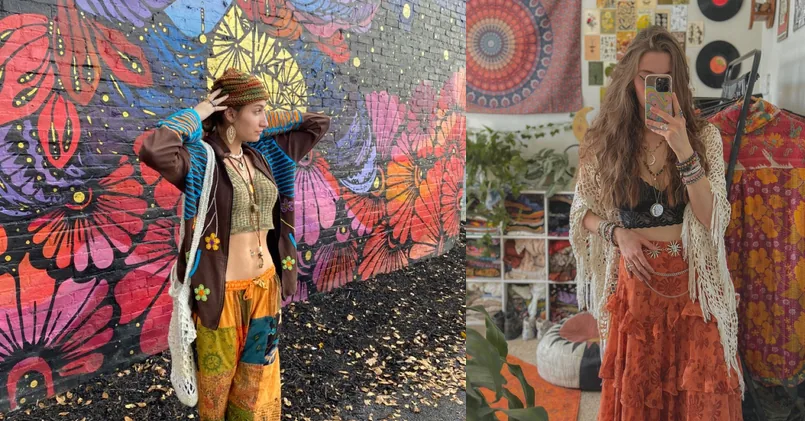
Spring boho borrows from 1970s counterculture fashion but filters it through modern proportions and fabrics. Hippie spring outfits keep that filter. The original hippie wardrobe was about rejecting structure: flowing fabrics, earthy colors, handmade details, and nothing that looked corporate. The spring version keeps that spirit but updates the execution. Modern boho uses the same elements (florals, fringe, crochet, wide-leg silhouettes) with better fits and more intentional color coordination.
One statement vintage piece can anchor an entire modern outfit, and a 1970s suede fringe vest is the classic example. The hippie spring wardrobe works the same way: one or two boho elements mixed with clean modern basics.
What defines hippie spring style
The look traces back to the hippie counterculture of the 1960s and 1970s, when festivals such as Woodstock made flowing, handmade, nature-referencing clothing a visible statement. The spring version keeps those cues and lightens them with breathable fabrics and softer colors.
Key pieces
- Floral maxi dress or tiered midi skirt
- Wide-leg pants in a neutral tone
- Crochet top or peasant blouse
- Suede or embroidered jacket
- Platform sandals or western boots
- Printed kimono or duster
- Layered necklaces, fringe or woven bag, printed scarf
Flowy Silhouettes and Maxi Lengths
The flowing silhouette is the hippie foundation. Wide legs, long hems, loose fits. Spring is the season where these proportions work best because the lighter fabrics move in wind and the layering keeps the look interesting without adding bulk.
Floral Maxi Dress With Platform Sandals
Image: Pinterest
A floral maxi dress in warm tones with platform sandals and layered jewelry. The floral maxi is the piece most people picture when they think hippie fashion, and it works because the long, flowing shape creates the romantic silhouette that the aesthetic requires. Platform sandals add height without formality and reference the 70s directly. Warm-toned florals (rust, mustard, olive, burnt orange) read as more authentically boho than cool-toned florals because they reference earth and nature rather than gardens.
Wide-Leg Pants With Cropped Crochet Top
Image: Pinterest
High-waisted wide-leg pants with a crochet crop top and sandals. The wide-leg pant is the boho bottom that has replaced the maxi skirt for many women because it offers the same flowing proportion with more practical mobility. The crochet top adds the handmade texture that hippie fashion values. The combination of wide legs and a fitted top creates the proportion balance that prevents the outfit from looking shapeless. Crochet tops from brands like Free People run $40 to $80, but similar styles exist at Zara and H&M for under $25.
Tiered Midi Skirt With Peasant Blouse
Image: Pinterest
A tiered midi skirt with a peasant blouse and woven belt. The tiered skirt adds movement and visual rhythm through horizontal seam lines that create a cascading effect when you walk. The peasant blouse (gathered neckline, puff sleeves, lightweight cotton) is the top that looks most authentically hippie because the construction references folk and traditional garments. A woven or braided belt at the waist defines the silhouette and adds another handmade-looking texture to the outfit.
Earthy Colors and Natural Textures
The hippie color palette centers on earth: brown, rust, olive, mustard, cream, and terracotta. These are the colors of natural dyes, unbleached fabrics, and the 1970s aesthetic that Laurel Canyon made iconic. Spring adds softer tones (sage, blush, lavender) that still read as boho when combined with natural textures like linen, cotton, suede, and leather.
Suede Jacket Over Floral Dress
Image: Pinterest
A suede jacket in brown or tan over a floral spring dress with boots. Suede is the hippie fabric that adds the most instant boho credibility to any outfit. The texture is warm, the material references western and folk traditions, and the color range (tan, cognac, rust, olive) sits naturally in the earthy palette. A suede jacket over a lighter, more delicate dress creates the contrast between rugged and feminine that hippie fashion thrives on. A vintage or thrifted suede jacket is a strong buy because it layers over dresses, jeans, and even other jackets for years.
Linen Coordinate Set in Natural Tone
Image: Pinterest
A matching linen set (top and wide-leg pants or skirt) in cream, oatmeal, or sage. The linen set is the modern boho equivalent of the classic hippie tunic-and-pants combination: natural fabric, flowing silhouette, monochrome palette. Linen wrinkles are an asset in hippie fashion because they signal natural fiber and relaxed attitude. The matching set eliminates coordination decisions and looks like a complete aesthetic statement. This overlaps with cottagecore, but the hippie version uses warmer, earthier tones rather than cottagecore’s pastels and whites.
Denim and Embroidery Mix
Image: Pinterest
An embroidered top or jacket with denim (jeans, skirt, or shorts) and suede or leather accessories. Embroidery is the handmade detail that separates hippie fashion from regular casual because it references folk art, travel, and the counterculture tradition of personalizing clothing. Embroidered denim (jackets especially) became a hippie symbol in the 1960s and the detail still carries that association. Modern embroidered pieces from Free People, Anthropologie, or vintage stores add the artisanal quality that mass-produced fashion lacks.
Boho Accessories and Layering
Accessories are where hippie fashion gets its distinctive character. Layered jewelry, woven bags, headbands, scarves, and belts. The hippie approach to accessories is “more is more” but within a cohesive palette. Everything should look like it was collected over time, not purchased as a matching set.
Layered Necklaces With Fringe Bag
Image: Pinterest
Multiple layered necklaces (pendants, beads, chains at different lengths) with a fringe crossbody bag. The layered necklace is the accessory technique that anchors boho styling because the multiple chains create visual depth at the neckline that a single pendant cannot. The fringe bag adds movement and texture. Together they create the collected, traveled look that hippie fashion aspires to. Three necklaces is the sensible minimum for boho outfits: a choker, a pendant at mid-chest, and a long chain.
Headband or Scarf With Flowing Hair
Image: Pinterest
A fabric headband or tied scarf worn across the forehead or as a hair wrap with loose, natural hair. The headband is the hippie accessory that transforms any outfit into boho territory in one move. A printed scarf tied at the crown or across the forehead references Woodstock directly. The key is the fabric: woven, printed, or embroidered scarves read as boho. Satin or structured headbands read as preppy. Choose wisely because the material determines the aesthetic register.
Kimono or Duster Over Simple Base
Image: Pinterest
A printed kimono or long duster cardigan over a simple outfit (tee and jeans, or tank and shorts). The kimono layer is the spring hippie piece that adds the most visual impact with the least commitment because it goes over any existing outfit. A printed kimono over a black tee and jeans converts a basic outfit into a boho look in seconds. The longer length (mid-thigh to knee) creates the flowing silhouette. It is the best entry piece for anyone curious about hippie styling: it is reversible (take it off and the outfit is back to normal), affordable ($20 to $40 at most retailers), and the most forgiving in terms of fit.
Festival-Ready Boho With Boots and Layers
Image: Pinterest
A full boho look with western or ankle boots, layered jewelry, a hat, and mixed textures. This is the festival version of hippie spring styling that commits fully to the aesthetic. Western boots ground the outfit. The hat (wide-brim felt or straw) adds the final silhouette element. Layered jewelry and a fringe or woven bag complete the look. This is not everyday wear for most people but it is the version of hippie fashion that is most fun to put together and most rewarding to photograph.
Nine Pieces That Rotate
Start with six pieces: one floral maxi dress or skirt, one pair of wide-leg pants in a neutral tone, one crochet or peasant top, one suede or embroidered jacket, platform or western boots, and a woven or fringe bag. Add layered necklaces, a printed scarf, and one kimono or duster. Those nine items create twelve or more hippie spring outfits. Shop vintage and thrift stores first because authentic 70s pieces have a weight and texture that new reproductions rarely match.
What is hippie fashion style?
Hippie fashion uses flowing silhouettes, earthy colors, natural fabrics, and handmade details like embroidery, crochet, and fringe. It borrows from 1970s counterculture and emphasizes free-spirited, relaxed dressing over structure.
How do I dress hippie without looking like a costume?
Mix one or two boho elements (a maxi skirt, layered necklaces, a suede jacket) with modern basics like fitted jeans or a clean tee. The modern hippie look blends vintage references with current proportions.